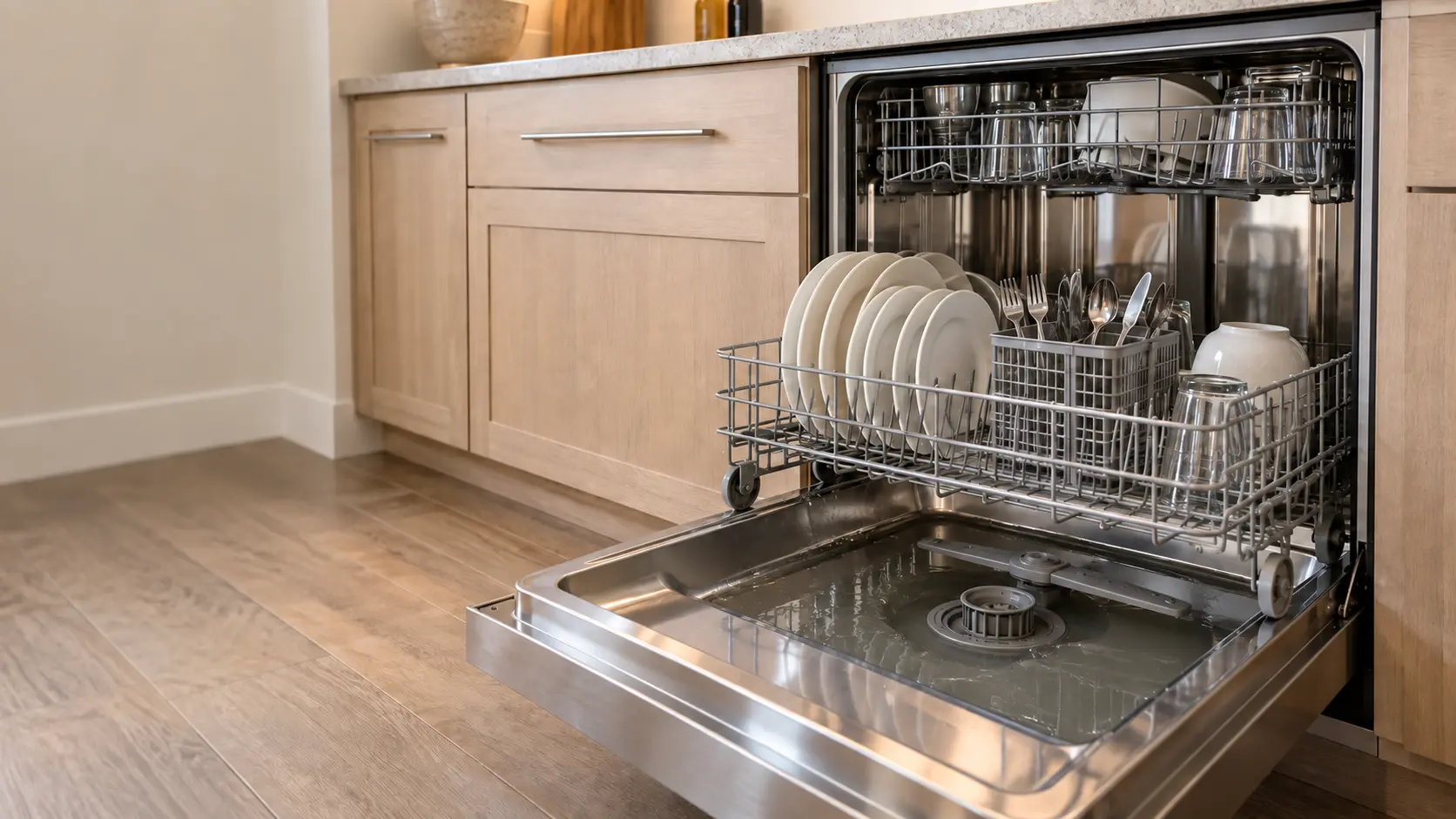

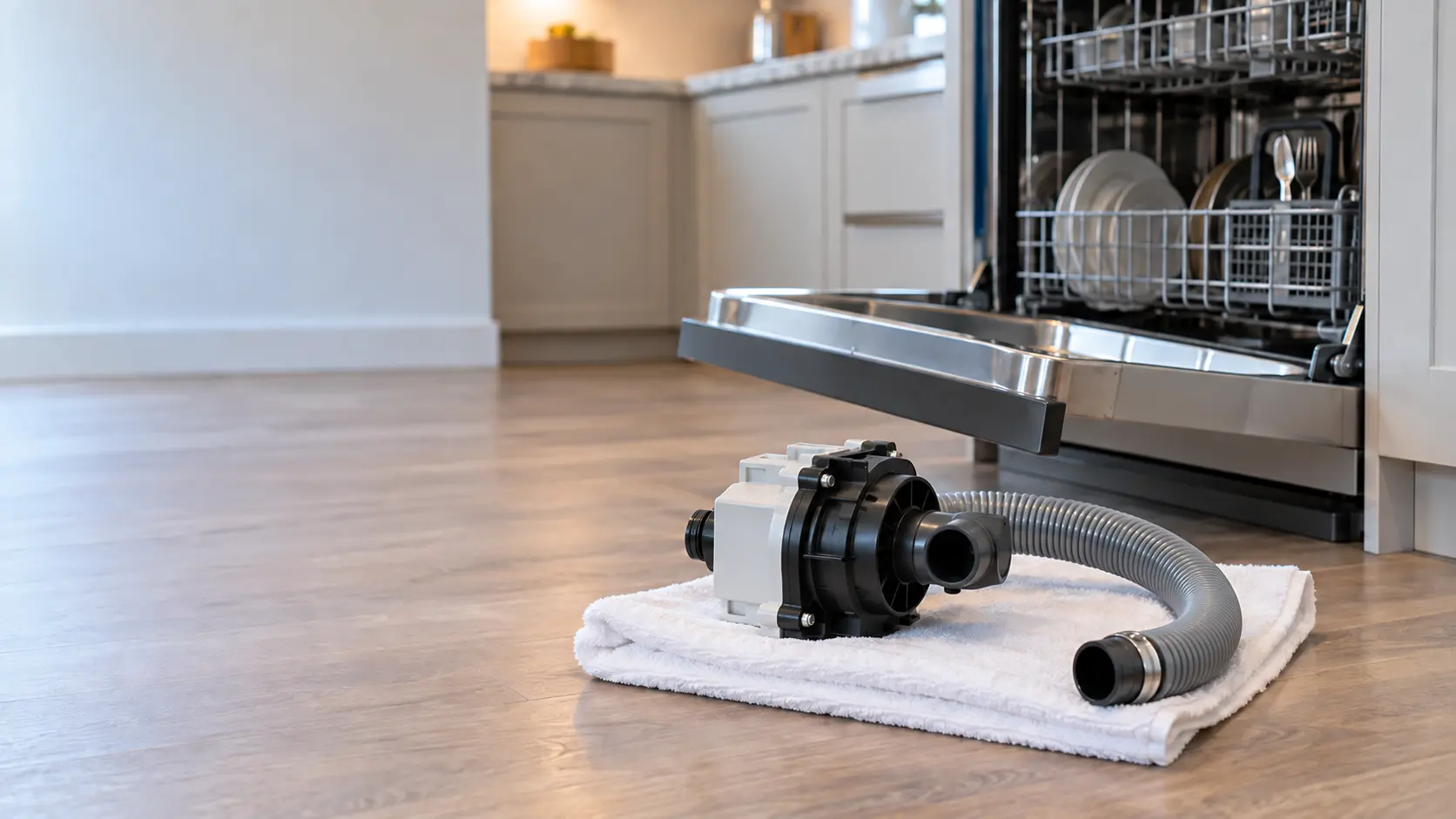
How the water gets out in the first place
A dishwasher does not drain by gravity. At the end of each wash and rinse, a small electric pump in the base pushes the used water up a flexible hose, over a loop set high under the counter, and down into the sink drain or the garbage disposal. Anything that slows the water at any point on that route leaves some of it behind in the tub.
The route has five places where things go wrong, listed here in the order water meets them:
- The filter assembly in the floor of the tub
- The sump and the drain pump beneath it
- The check valve that keeps drained water from flowing back
- The drain hose and its high loop or air gap
- The disposal inlet or sink tailpiece where the hose ends
How much water is left tells you where to start
A puddle under the filter
Lift out the lower rack and look at the floor of the tub. If the water sits only in the round well around the filter and does not rise above the filter housing, the machine is most likely behaving as designed. Whirlpool says a little water there, about halfway up the filter area, is normal and keeps the seals from drying out between loads.
An inch or more across the tub floor
Standing water in the dishwasher that covers the tub floor and stays there after a full cycle is a real drain problem. Cloudy gray water with bits in it points toward the filter or the pump inlet. Clear water that returns an hour after the machine finished points toward the other end, where water from the sink or disposal is flowing back through the hose.
A cycle that stops with water in it
Many controls check that the tub emptied before they move on to the next fill. When the pump runs but the water level barely moves, the board may pause the cycle, blink, or show a drain message. The meaning of any specific code belongs to the brand, and our error code pages list them by manufacturer.
Source: Whirlpool — Not draining, water remains at end of cycle — Some water in the filter area is normal; check disposal and air gap
The tub end: filter, sump and pump
Many current dishwashers have a two-piece manual filter under the lower spray arm: a fine mesh cylinder that twists out, and a flat coarse screen around it. When the cylinder is packed with grease and pulp, the pump can only draw water through it slowly, and a full drain that should be over quickly never finishes before the control gives up.
Below the filter is the sump, the small well where the pump draws in water. A cherry pit, a sliver of glass or a twist tie that slipped by the filter can wedge in the pump inlet or wrap around the impeller. The pump then hums at the end of a cycle without moving any water, which is the sound to listen for with the door closed.
The check valve
Most designs place a small flapper or ball valve at the pump outlet or where the hose leaves the machine. It lets water out and stops it from coming back. When food jams it open, drained water slides back into the tub; when it sticks shut, the pump strains against a closed door. Either way the owner sees the same puddle.
The sink end: disposal, air gap and trap
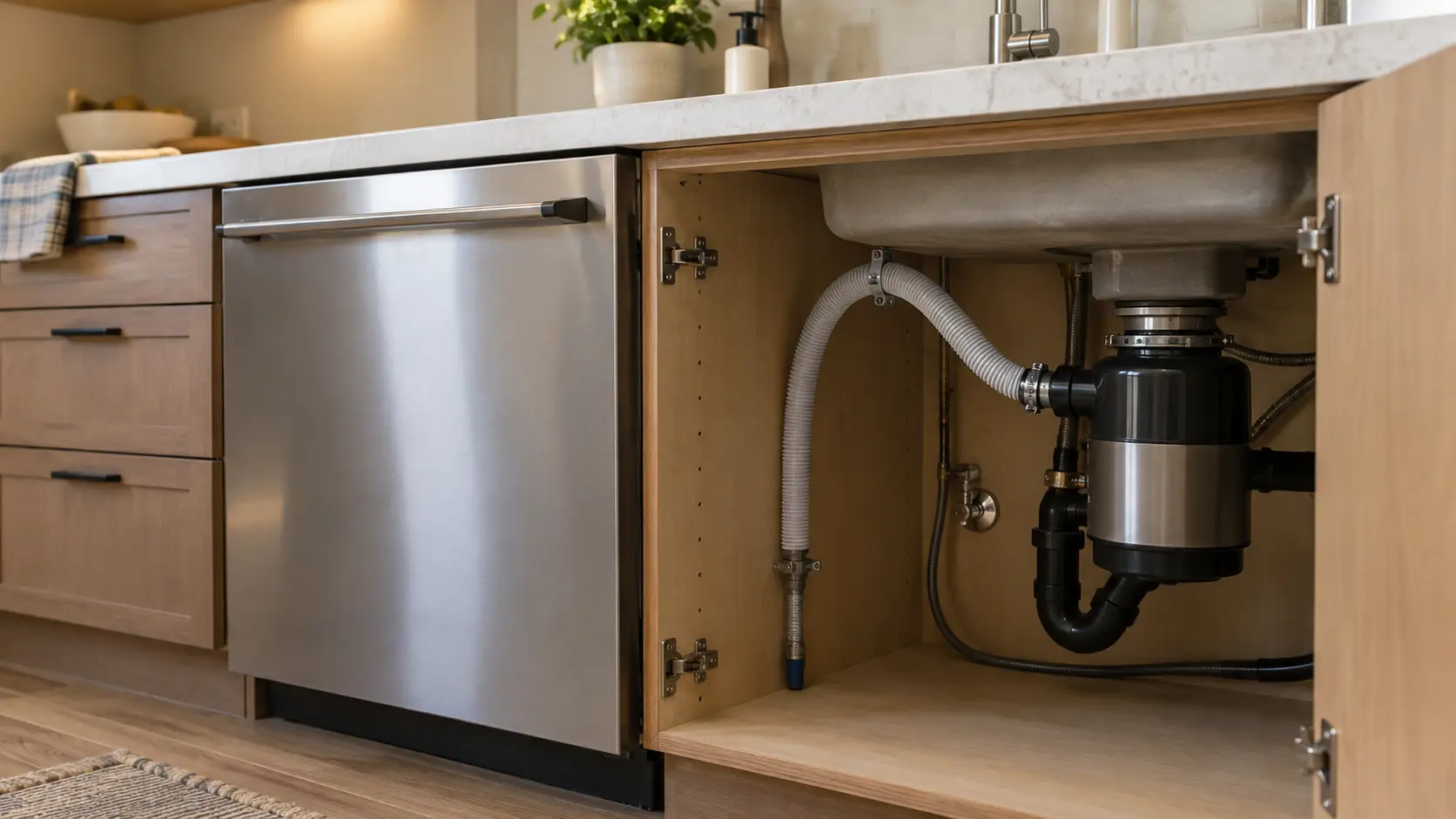
A new garbage disposal arrives with a plastic knockout plug sealing its dishwasher inlet. If the installer did not punch it out, the dishwasher cannot drain at all from the first day. It is a common reason a freshly installed pair of appliances fails together, and it is visible once the hose clamp at the disposal is loosened.
Established kitchens clog differently. Grease builds in the disposal inlet and the sink trap until the dishwasher, pushing against that slow drain, leaves water behind. A sink that also drains slowly, or a disposal that has not been run for days, points here.
- Run the disposal with cold water until it sounds empty before starting the dishwasher.
- Take the chrome cap off the air gap on the sink deck, pull off the inner cover and clear the debris inside.
- Look for water spitting out of the air gap during the drain, which means the hose below it is blocked.
Source: Whirlpool — Not draining, water remains at end of cycle — Some water in the filter area is normal; check disposal and air gap; Whirlpool — Not draining, newly installed — Remove the disposer knockout plug; route the hose in a high loop
The hose between the two
On its way to the sink the hose has to climb to a high loop fastened under the counter, or to an air gap, and only then fall toward the plumbing. Whirlpool asks for the top of that loop to sit at least 20 inches above the floor. A hose that sags to the cabinet floor lets dirty sink water siphon back into the tub, which is why the leftover water sometimes smells of the disposal rather than of detergent.
Kinks are the other hose problem, and they usually happen when a machine is pushed back into its opening after service or installation. The kink is hidden behind the machine on a built-in or a panel-ready model, and it only shows when the dishwasher slides forward.
What changes on drawers and compacts
In a double dishwasher drawer, each drawer has its own drain pump, and both hoses usually join before the sink connection. One drawer holding water while the other drains points at that drawer's filter, pump or hose rather than at the kitchen plumbing. Portable compacts drain through a hose hooked into the sink, and one that slipped below the rim or kinked against the faucet adapter is easy to spot.
Source: Whirlpool — Not draining, newly installed — Remove the disposer knockout plug; route the hose in a high loop; Whirlpool — Checking the drain loop height — High loop at least 20 inches above the floor


