
What the leftover dirt is telling you
Before touching the machine, take one dirty plate and one glass to the window and look closely. Dishes still dirty after the dishwasher are not all dirty in the same way, and the kind of residue sorts the problem into one of three families, each with its own short list.
- Chunks of food still stuck where they were: the spray never reached that spot, or reached it too weakly.
- Sandy grit or specks spread across clean surfaces: dirty water was sprayed back onto the dishes, usually from a clogged filter.
- White or cloudy film, or spots that wipe off with vinegar: hard water, too little detergent or no rinse aid.
- Greasy feel on plastics and glasses: water that was too cool for the detergent to work.
When the water is not reaching the dishes
Blocked spray arm jets
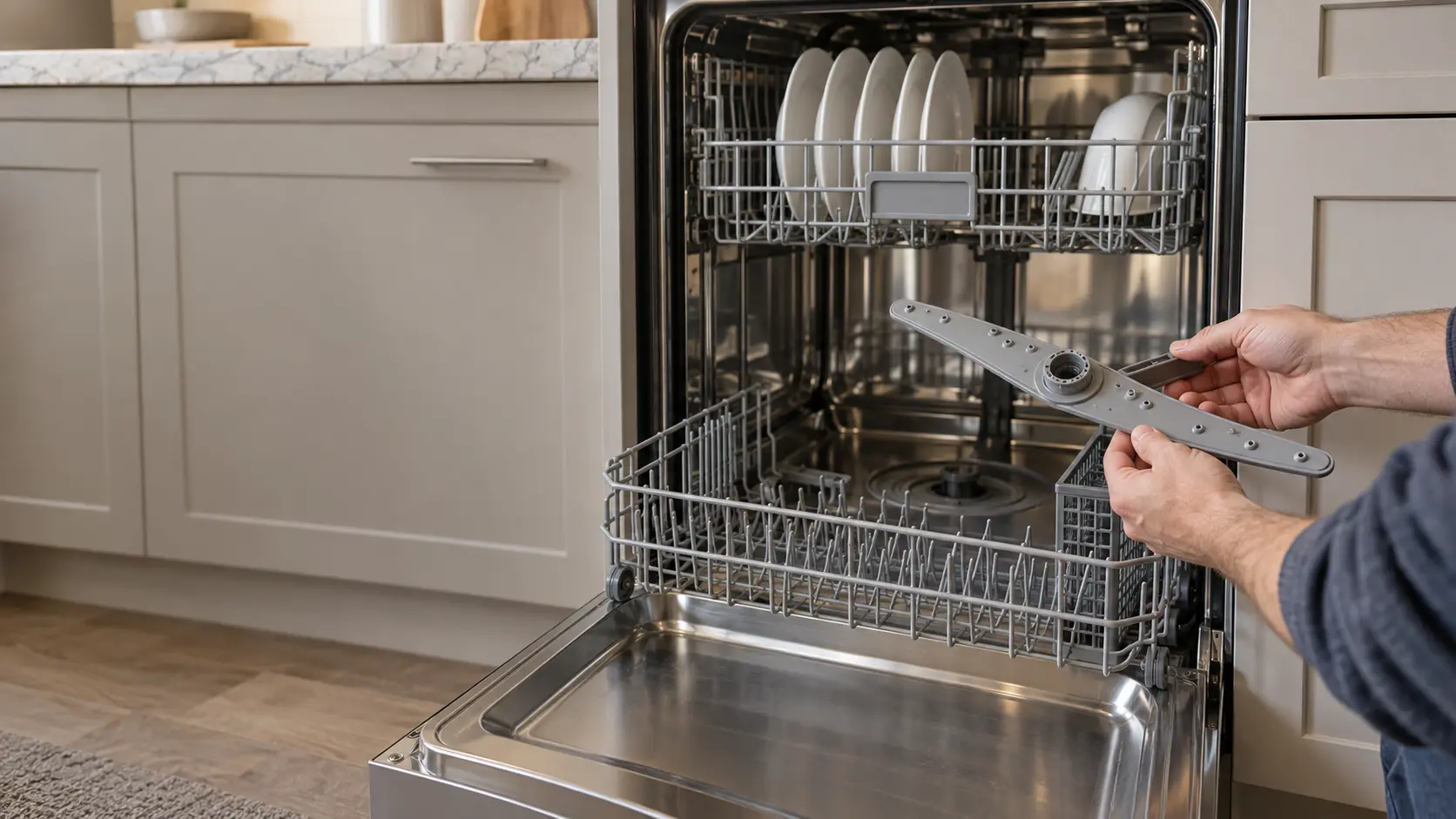
Each spray arm is a hollow plastic bar with small jets along its top and bottom. A seed, a shard of eggshell or scale can close several of them. Pull the lower arm straight up, unscrew or unclip the upper arm under the middle rack, and hold each one to the light: every hole should show through. A toothpick clears most of them, and shaking the arm tells you if something is loose inside.
Arms that cannot turn
The arms spin on the force of their own water. A tall cutting board, a pan handle hanging through the rack or a utensil dropped under the lower arm can stop the rotation, and a stopped arm washes only a narrow strip. Spin each arm by hand after loading; it should turn freely and clear everything.
The upper rack feed
On most built-in and panel-ready models the middle arm gets its water through a tube on the back of the upper rack that docks with a port on the rear tub wall. If the rack was put back on the wrong track or at a different height setting, that tube misses the port, and the top rack comes out dirty while the bottom rack is fine.
Source: Whirlpool — Spray arm not working — A blocked spray arm delays detergent release and soil removal

Loading, cycle choice and the soil sensor
Large platters placed in front of the detergent cup keep the door-mounted dispenser from opening into the spray, so the detergent lands in a pile instead of dissolving. Bowls nested inside each other, or cups standing upright, shield themselves from the jets. The dirty side of each item should face the center of the machine, where the water comes from.
Many current machines also choose how long and how hot to wash from a turbidity sensor that measures how cloudy the first water is. ENERGY STAR advises against pre-rinsing, and there is another reason: dishes rinsed clean at the sink can make the sensor choose a light wash, leaving behind the few baked spots that remained. Scraping is enough, and a heavy or pots cycle is the right answer for dried-on food.
Source: ENERGY STAR — Dishwashers — Scrape instead of pre-rinsing; soil sensors read how dirty the water is; Whirlpool — Dishes are not clean — Face soiled surfaces toward the spray and avoid overloading
When the water is too cool
Detergent enzymes and the grease-cutting part of the wash both depend on heat. A dishwasher that fills from a supply line far from the water heater may spend its whole first fill on water that has cooled in the pipe toward room temperature. Let the sink tap run hot for a minute or so first, and check with a kitchen thermometer that the tap reaches about 120°F.
The machine then raises the temperature with its own heater during the main wash and the final rinse. If the tub is barely warm when you open it mid-cycle, and the dishes stay wet as well as dirty, the heating element or its temperature sensor belongs on the list.
Source: Whirlpool — Dishwasher water temperature troubleshooting — Run the tap until hot and aim for 120°F
The filter, and the parts behind it
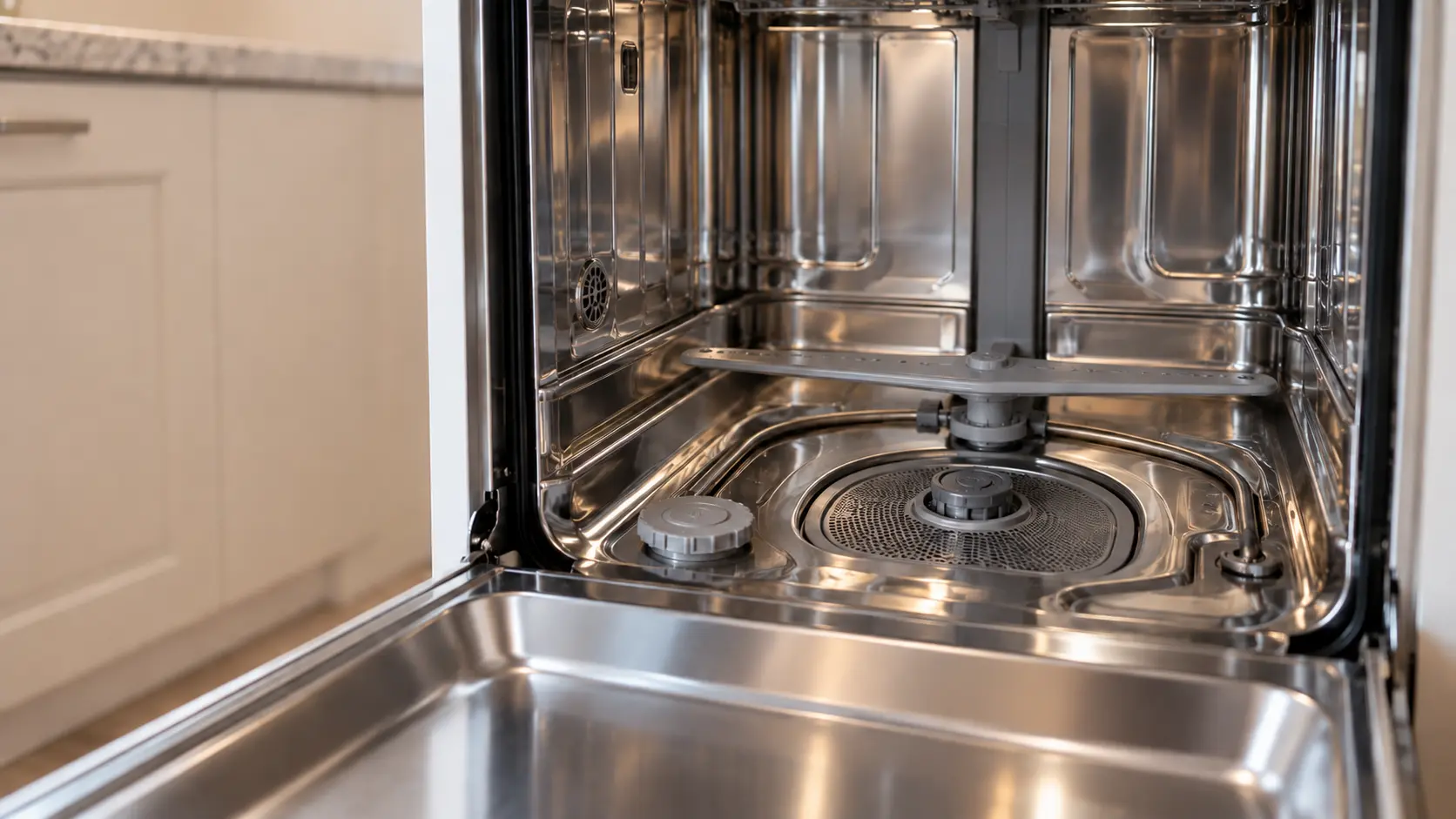
A clogged filter hurts cleaning twice: the wash pump draws less water, so the jets weaken, and what it does draw carries fine grit back onto the dishes. It is quick to rule out and belongs near the top of any search for this problem.
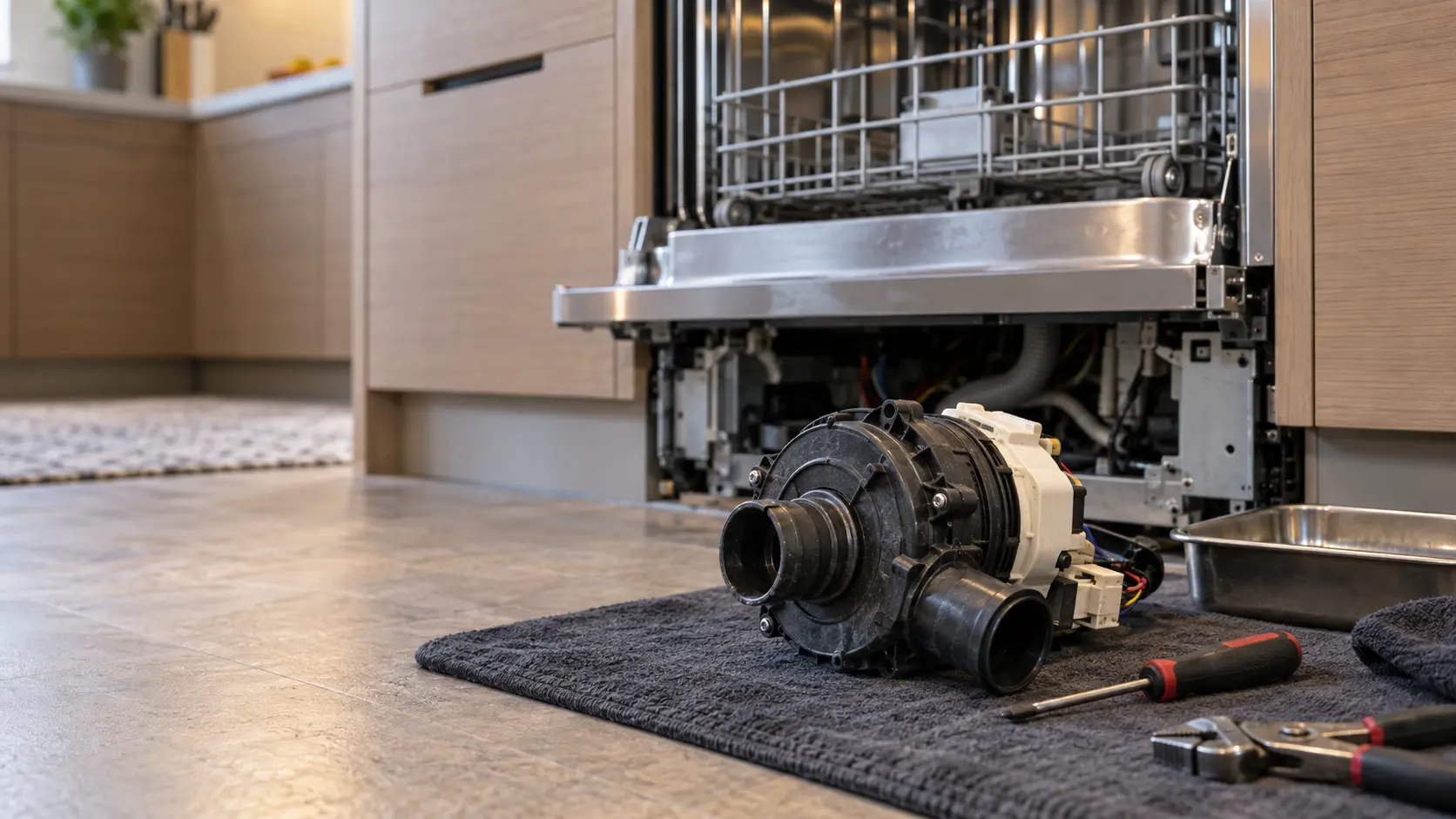
Only after the jets, loading, water temperature and filter are ruled out does the circulation pump deserve suspicion. A weak wash motor often changes its sound, a steady whoosh turning into a thin trickle or a grinding hum. Drawers and compacts run smaller pumps, so a partly blocked filter shows up in their results sooner than on a full-size model.
Hard water deserves its own mention here, because it can look like dirt. Scale on the spray arm jets narrows them over months, and a white crust inside the tub or on the heating element is the sign that the rinse aid and detergent dose need to rise with the hardness.
- Built-in and panel-ready: filter under the lower arm, pump in the base behind the kick panel.
- Drawer: each drawer has its own small filter and pump, so one drawer can clean poorly alone.
- Compact and countertop: a small filter in the tub floor, often a single spray arm.