

Dishwasher Leaking Water
Usually turns out to be
What to check first
What we do
Ten repairs we take on. Each repair has its own page: what the job covers, where it sits on cost, and when putting money into an older machine stops making sense.
Mon–Sat, 8am–8pm
Book a visit
Three short steps, about a minute.
or call (844) 430-4286
Loading appointment form…
The appointment form couldn’t load. Please try again.
Familiar brands. Expert care.
Independent repair service. Not affiliated with, authorized or endorsed by any manufacturer. Brand names and model numbers are the property of their respective owners and are used here for identification only, to describe the appliances we service.
In the order it gets done: the cheapest cause first, and the expensive answer at the bottom where it usually belongs.

The visit that turns a vague complaint about dirty dishes or standing water into one named part and one price.
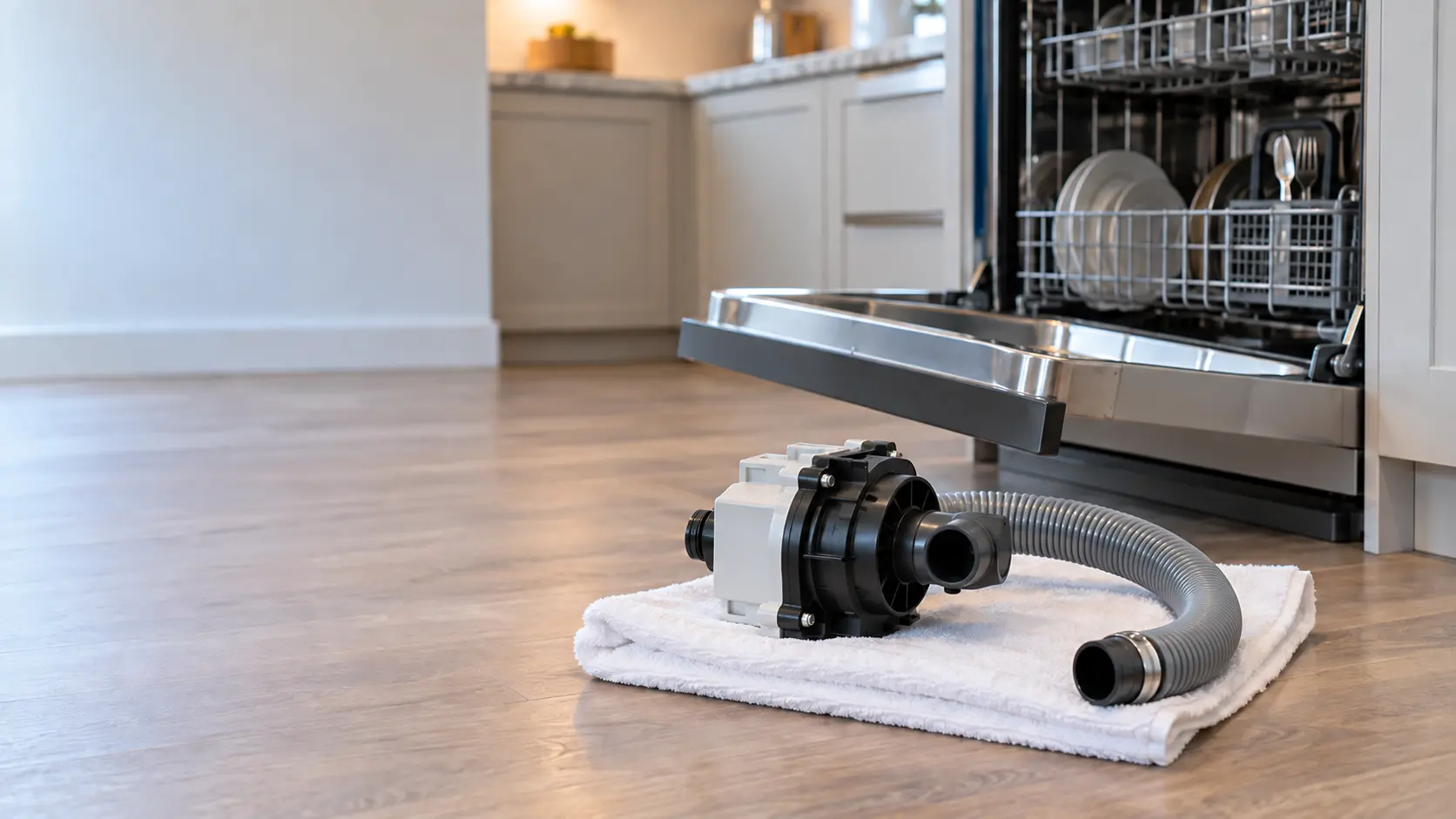
Water left standing in the tub, cleared by finding where the drain path actually stops.
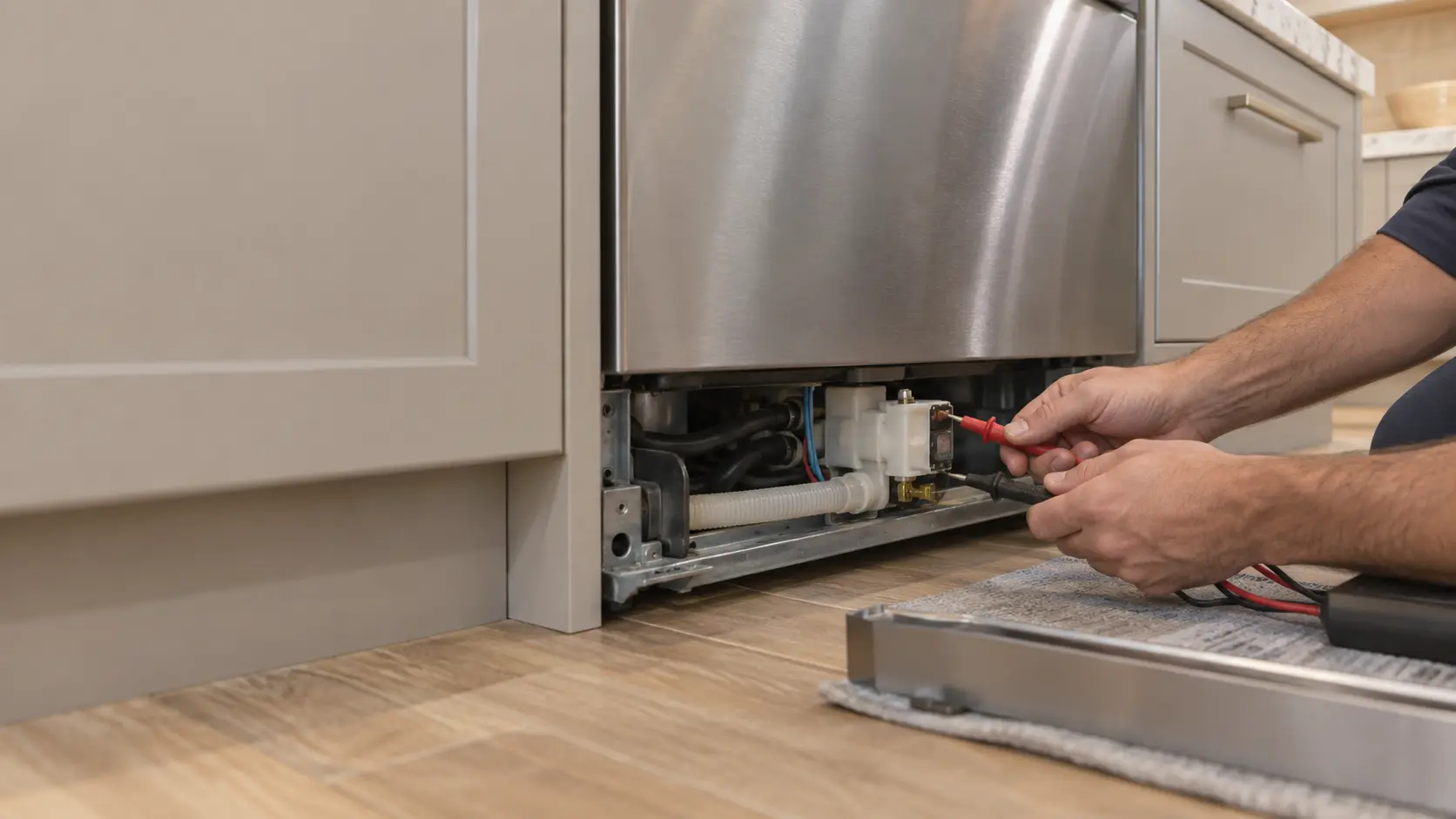
A dishwasher that will not fill, fills too little, or keeps filling, traced through the valve, the float and the supply.
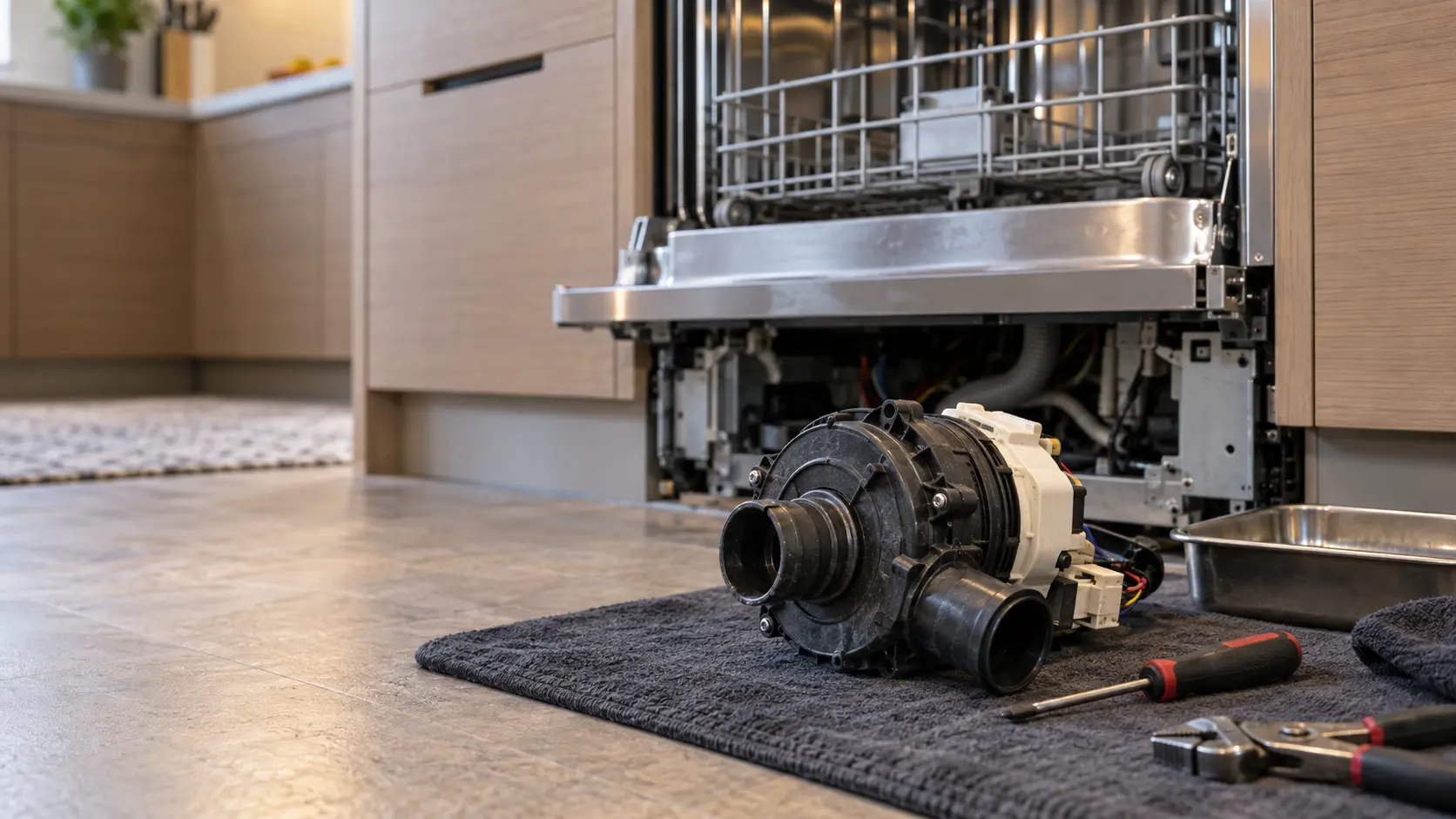
The motor that throws the water at the dishes, and the most expensive part most dishwashers have.
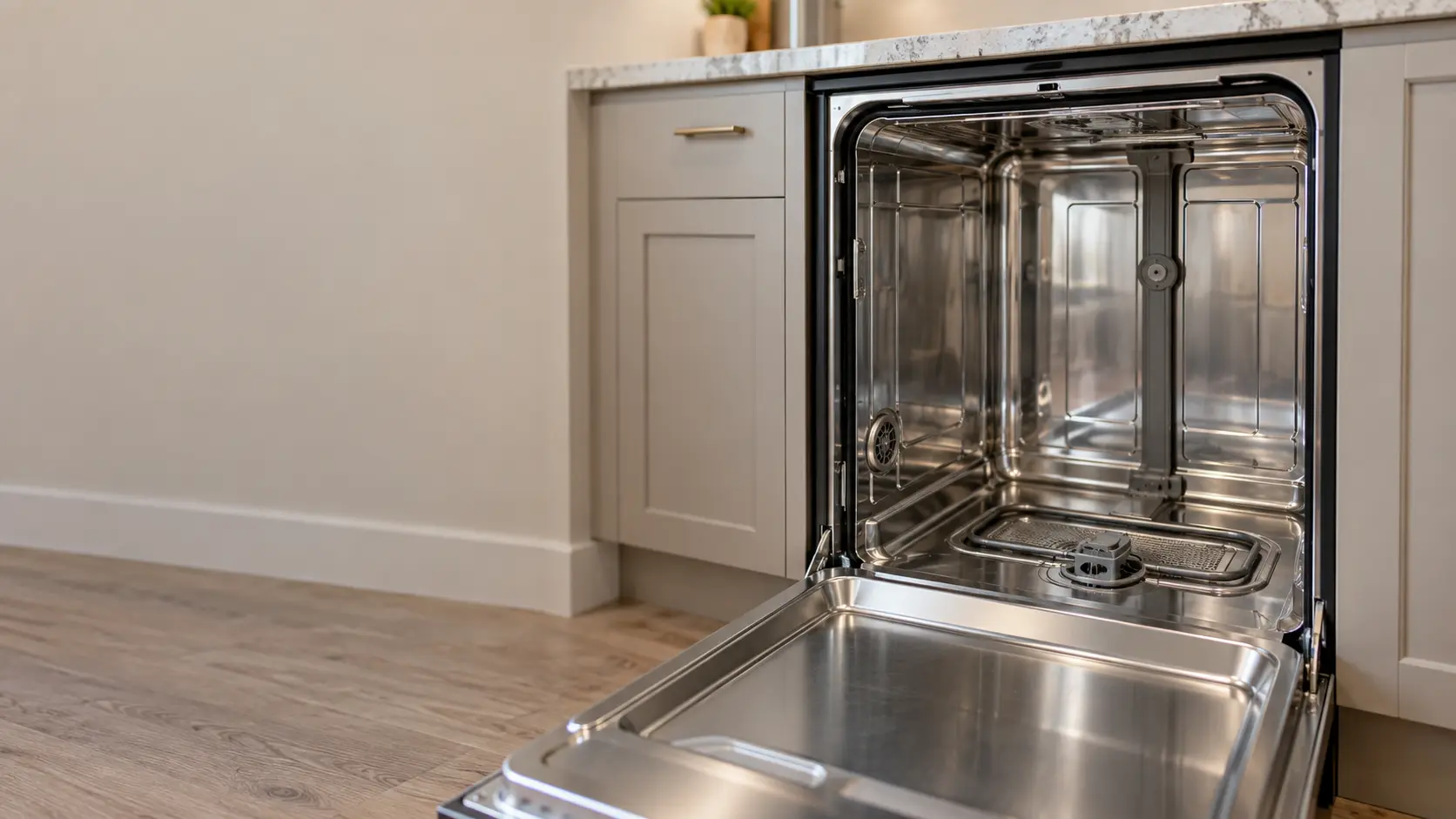
Cold washes, wet dishes and cycles that run for hours, traced to the heater, its sensor or its safety cutout.

A door that will not latch, falls open, or slams shut, repaired at the latch, the hinge springs or the cables.
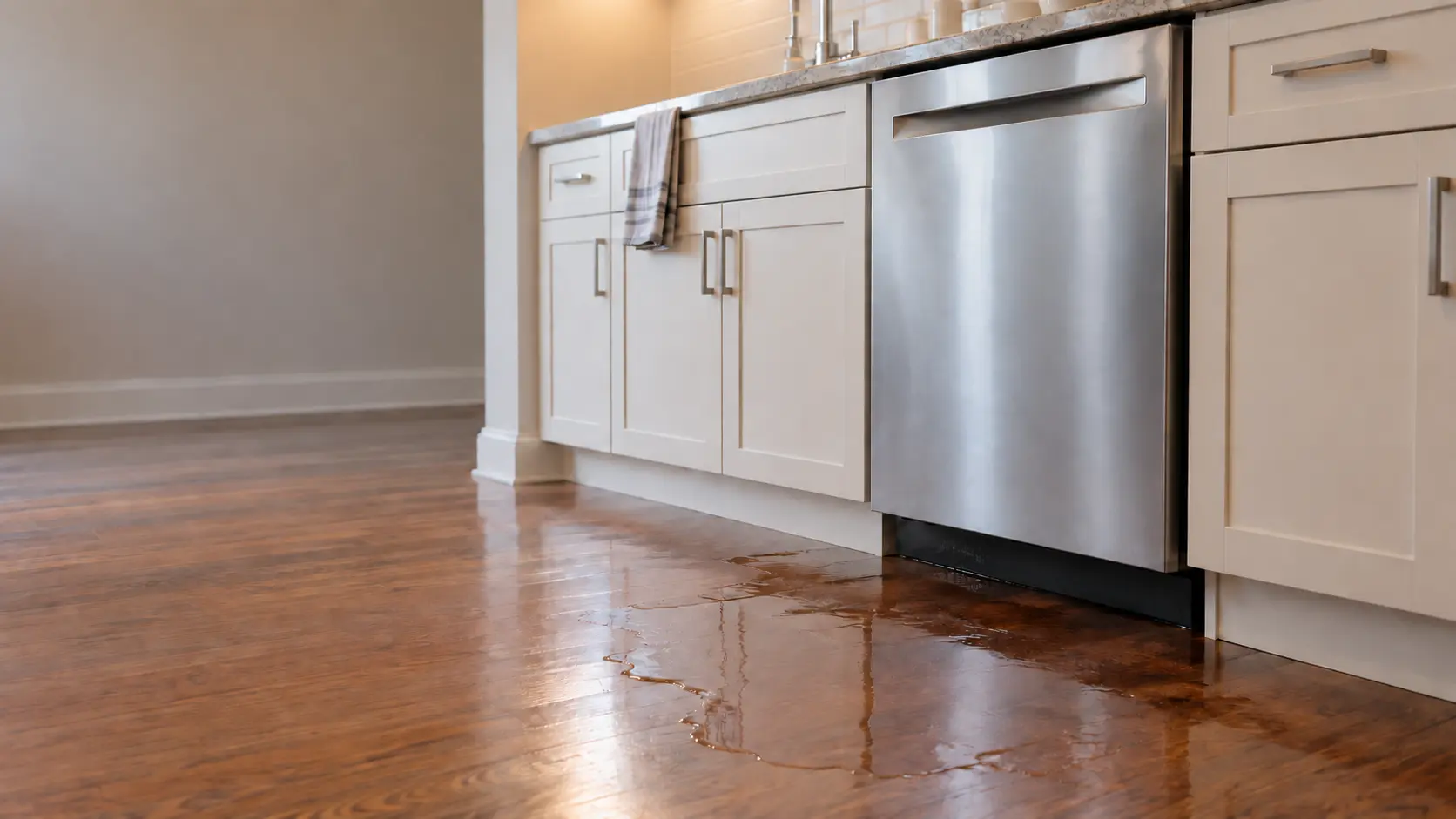
Water on the floor or under the unit, followed back to the gasket, the hoses, the pump seal or the tub.

Dead panels, stuck cycles and blinking lights, separated into board, keypad, sensor and wiring before a part is ordered.
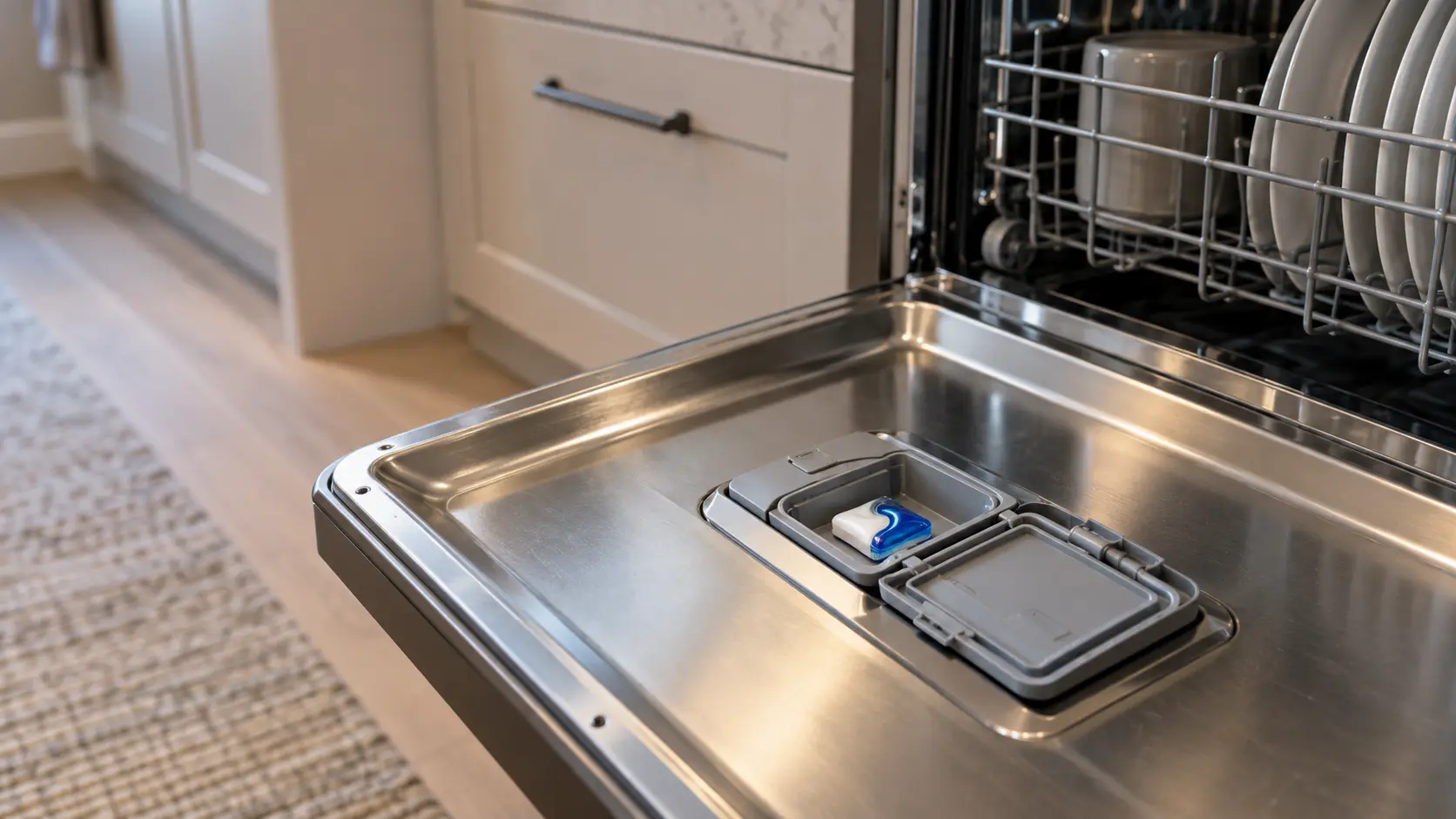
Detergent left in the cup or dumped at the start, fixed at the lid, the spring, the latch or its actuator.

A visit that clears the filter, the spray arms and the drain path before they become a repair call.
Before you bookBands rather than prices, because nobody can quote a figure before the dishwasher has been looked at — and the diagnostic visit that decides it, set against the repair.
10 repairsCheapest firstDiagnostic visit Read the cost guideA practical test: set the repair against the price of a dishwasher that fits the same opening. A standard 24-inch built-in is easy to replace, so a wash motor on an older basic model often is not worth fitting. A panel-ready unit, a drawer or an ADA-height machine is harder to match, and that keeps the repair worthwhile further up the scale.
| Repair | Relative cost | Notes |
|---|---|---|
| Filter and spray arm cleaning | lowest | Often all a dishwasher that leaves grit, film or a smell actually needs, and cheaper than any part below it. |
| Door latch, hinge springs or cables | low | A dead machine with its lights on, or a door that drops open, usually ends at one of these small parts. |
| Drain pump or drain hose | low | Standing water after the cycle, once the filter, the disposer inlet and the air gap have been cleared. |
| Water inlet valve or float switch | low | The usual answer to a dry hum at the start of a cycle or an overfill shutdown. |
| Detergent dispenser assembly | low | A lid that stays shut or will not latch, once loading has been ruled out. |
| Door gasket, hose or pump seal leak | low | Most leaks end at a seal or a connection; a cracked tub is the rare exception that changes the answer. |
| Heating element, thermistor or high-limit | moderate | Cool dishes and very long cycles. Where the heater sits inside the pump housing, the part is larger and the band moves up. |
| Control board, keypad or sensor | moderate | Priced against the model, and tested against its inputs first so a sound board is not replaced. |
| Circulation pump or wash motor | highest | The largest part in most dishwashers, and the repair where age and model decide whether it is worth doing. |
Most people arrive knowing the symptom, not the repair. These are the jobs each one usually turns out to be, cheapest first — and every one of them starts with the diagnostic visit.
Usually turns out to be
What to check firstUsually turns out to be
What to check firstUsually turns out to be
What to check firstUsually turns out to be
What to check firstUsually turns out to be
What to check firstUsually turns out to be
What to check firstUsually turns out to be
What to check firstUsually turns out to be
What to check first
Back to your everyday
Three short steps online, or one call. Tell us what you are seeing and pick a window that works.