Why the filter comes before any repair
Every drop of wash water passes through the filter on its way back to the circulation pump, and every drop leaving the machine passes it on the way to the drain pump. A coated filter starves both. The spray gets weaker, fine debris lands back on the glasses, draining slows, and the sump starts to smell.
Older machines often had a self-cleaning filter with a small chopping blade that ground food and sent it down the drain. Many current models use a manual filter instead, which Whirlpool describes as quieter and easier on water and energy, and that means the owner now does the cleaning the chopper once did.
Source: Whirlpool — Water remains in the filter area — Rinse the filters at least monthly; the filter design is quieter and efficient
Where to find it on each type
Built-in and panel-ready
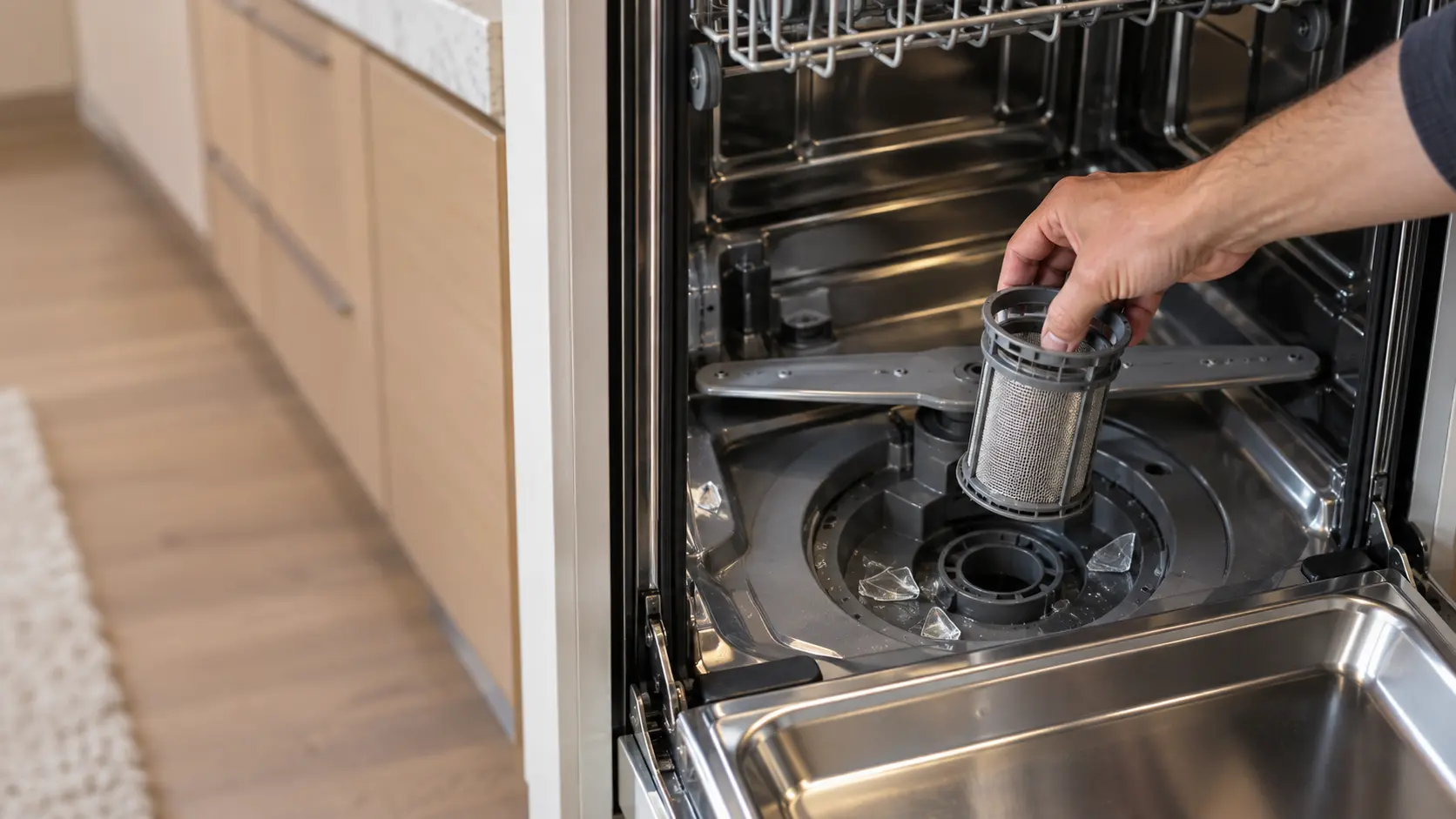
Pull the lower rack all the way out. In the tub floor under the spray arm is a round cap with a handle or arrows molded into it, sitting in a flat screen that covers much of the floor. Panel-ready models use the same assemblies as their stainless relatives, so the cabinet front changes nothing inside.
Dishwasher drawers
Each drawer has its own filter in the center of its tub floor, usually under a removable spray arm. In a double stack, clean both even if only one drawer is washing poorly, because they tend to clog at about the same pace.
Compact and countertop models
Compacts use a smaller version of the same cylinder-and-screen pair. Countertop models often have a single cup-shaped filter that lifts straight out and holds far less, so it fills up in fewer loads.

What you will find inside
Expect a gray paste of food pulp and grease on the mesh, and sometimes a surprise or two in the cup at the bottom of the cylinder. Items that turn up regularly:
- Paper labels from jars and plastic containers
- Broken glass and pieces of ceramic
- Seeds, pits and bits of bone
- Twist ties, toothpicks and small bottle caps
- Fruit stickers and bits of plastic wrap
Cleaning it without damaging it
The mesh is fine plastic or stainless, and it tears. Use a soft dish brush or an old toothbrush and warm running water, and scrub from the inside of the cylinder outward so the debris leaves the way it came in. Greasy film comes off with a drop of hand dish soap on the brush, rinsed away completely before the filter goes back.
While the filter is out, look into the opening it leaves. That is the sump, and anything hard that sits there will reach the pumps. Reach in with a gloved hand or a paper towel, because broken glass collects there too.
Putting it back
Lay the flat screen down first so it sits flush, then drop the cylinder through it and twist it clockwise until the arrows line up or it clicks. A filter that is not locked can float up during the wash and let unfiltered water into the pump. Spin the lower arm by hand to make sure it clears the cap.
Source: Whirlpool — Cleaning the removable filtration system — Quarter turn to remove; no wire brushes; never run without filters
How often, and the signs it is overdue
Whirlpool asks owners to rinse the filters at least once a month, and the right interval depends far more on habits than on the brand. A household that scrapes plates into the trash and runs one load a day can go longer; one that runs two loads a day with sauce-covered pans needs a look every couple of weeks.
Learning how to clean a dishwasher filter is only half of it; the other half is noticing when it needs doing. The machine usually tells you before anything breaks:
- A sour or musty smell when the door is opened after a day or two
- Fine gray grit on glasses in the upper rack
- A thin layer of water left on the tub floor after the cycle
- A wash sound that has grown quieter or uneven
- Cycles that run noticeably longer than they used to
Habits that stretch the interval
Scrape bones, seeds and rice into the trash rather than into the machine, and peel paper labels off jars and tubs before they go in. Hand-wash anything with a loose sticker. Each of these keeps the mesh clear longer without adding any rinsing at the sink.
Source: Whirlpool — Water remains in the filter area — Rinse the filters at least monthly; the filter design is quieter and efficient