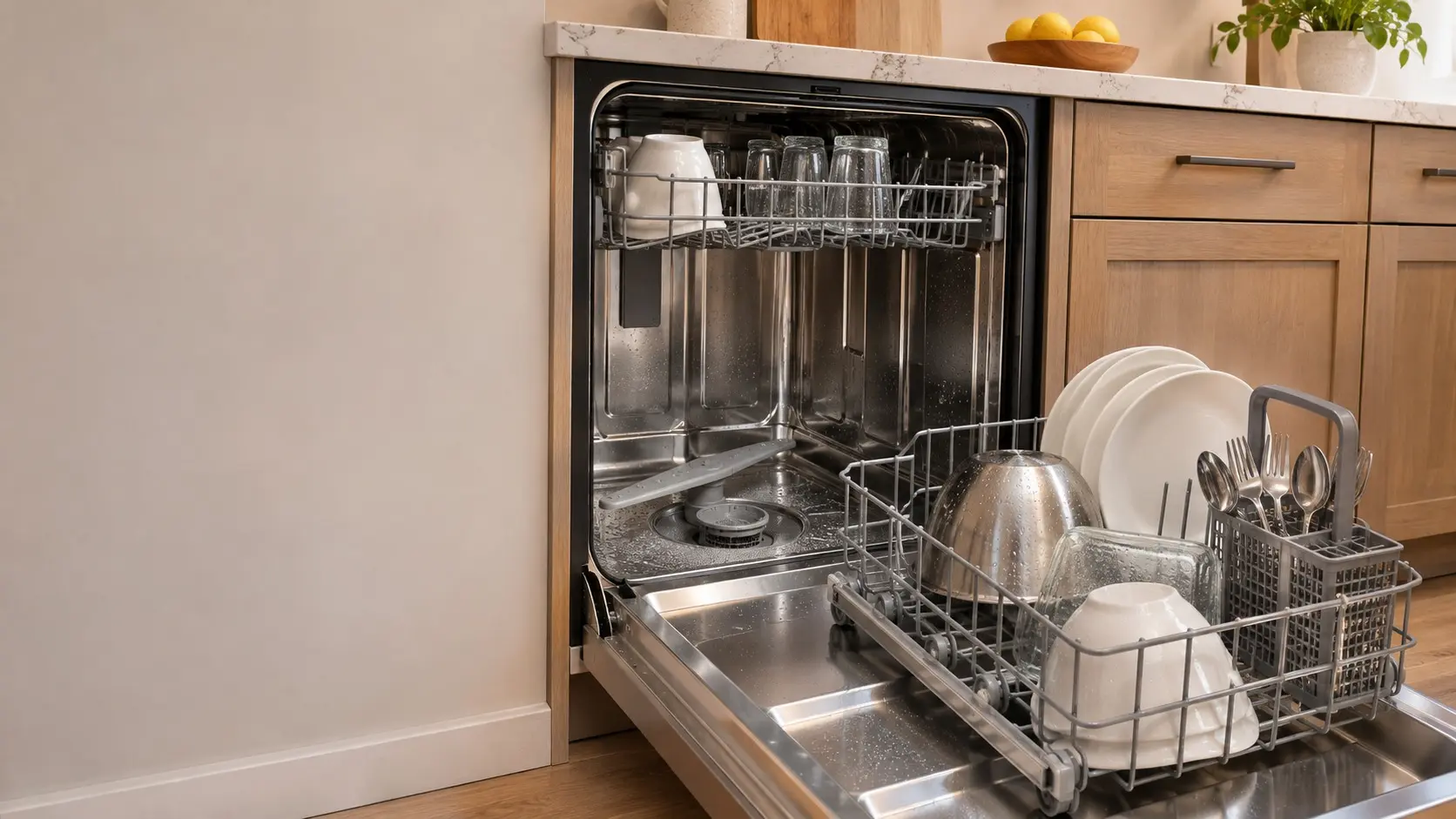


Which smell is it?
The odor is the best clue you have, because each source of smell in a dishwasher has its own character. Sniff the tub right after a cycle, with the door open and the rack pulled out, and match what you smell against the table.
| What you smell | Most likely source | First move |
|---|---|---|
| Sour, like old food | Filter, sump and spray arm holes | Pull and wash the filter |
| Musty, like a damp basement | Door gasket and lower door edge | Wipe the rubber folds dry |
| Sewage or rotten egg | Drain water flowing back from the sink | Check the drain hose loop |
| Stale water, slimy film | Water that never fully drains | Find why the tub holds water |
| Hot plastic or electrical | A part that is overheating | Stop and unplug |
A smell that appears only when the dishwasher is hot and running is a different animal from one that greets you when you open a cold door. The cold-door smell is almost always decaying residue. The hot-running smell deserves more attention, as the last section explains.
Why does food smell build up in the filter and sump?
Food smell builds up because the filter and the small sump under it hold soft residue that the cycle rinses off the dishes but cannot flush all the way out. On a typical built-in with a cylindrical filter, that residue sits right under the lower spray arm and stays wet between cycles, so it spoils the way leftovers do in a closed container.
Pulling the filter
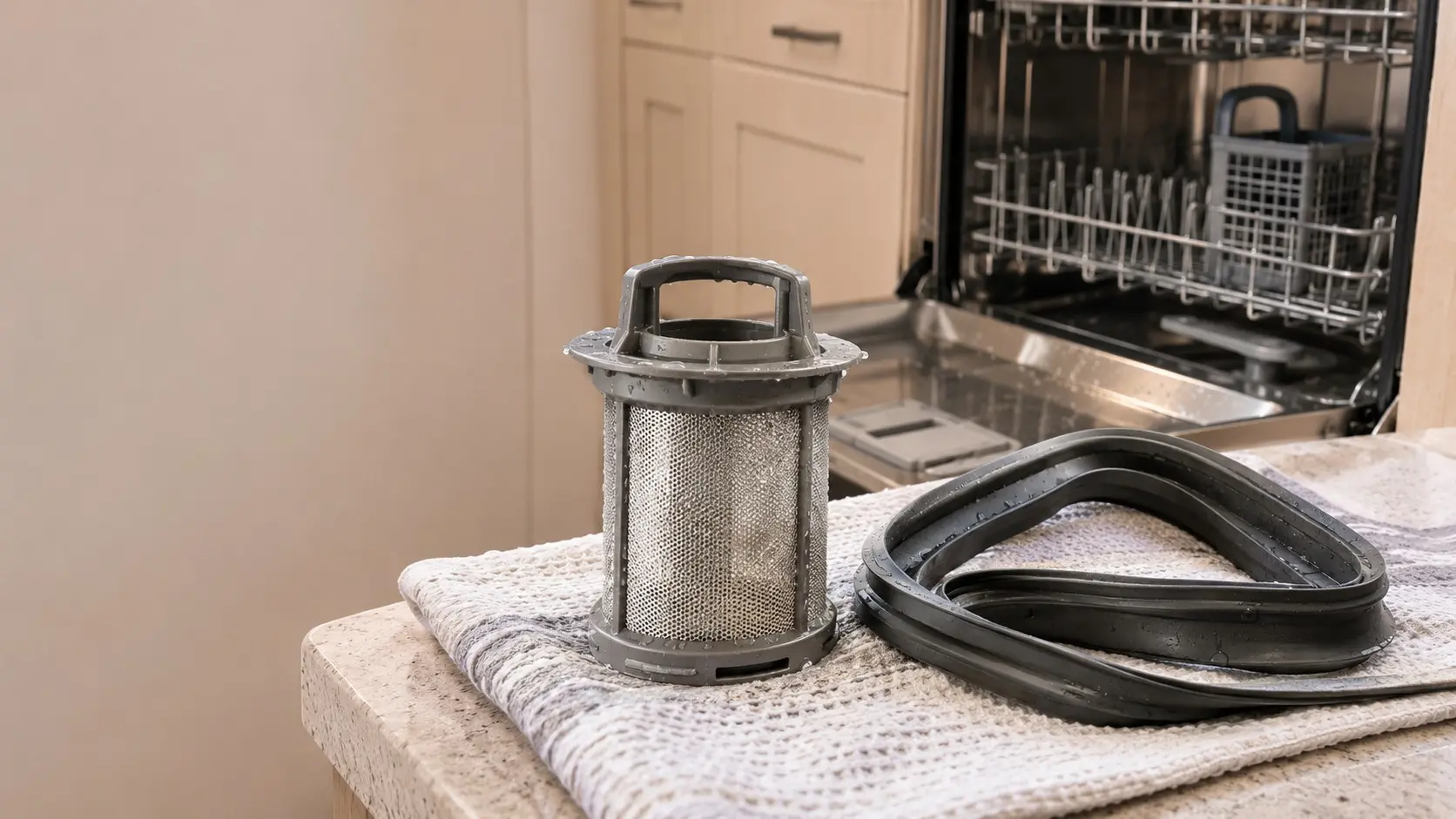
Open the lower rack out of the way, twist the cylinder or lift the flat screen out, depending on the design. The manual for your model shows which kind you have and how it comes out. Rinse it under warm tap water and scrub the mesh with a soft brush, as the filter and spray arm cleaning guide shows. A greasy film needs a drop of dish soap.
Clearing the sump and arm holes
With the filter out, wipe the bowl beneath it with a paper towel and look for a seed, a label scrap or a glass chip. Then check the holes of the lower spray arm with a toothpick. A blocked hole leaves residue behind and also hurts cleaning, which is covered in the filter-first guide.
Where does a musty smell come from?
A musty smell comes from the door gasket, the lower door edge and the folds where water drips and then sits. Black or pink film there is mold or bacteria feeding on a thin layer of grease and moisture.
- Wipe the full length of the gasket, including the fold at the bottom, with a cloth and warm soapy water.
- Wipe the bottom edge of the tub opening, where drips collect when you open the door mid-cycle.
- Check the detergent dispenser lid and the rinse aid cap for crusted residue.
- Leave the door cracked open a finger's width when the dishwasher is idle, so the tub dries.
Drawer-style and compact models trap moisture the same way, but their drawer seals sit lower and are easier to miss, so pull the drawer fully out and look at the whole perimeter.
Why does it smell like sewage or rotten eggs?
A sewer or rotten egg smell usually means drain water from the sink or garbage disposal is drifting back into the dishwasher. This is an installation issue, not dirt, so scrubbing will only help for a day.
The high loop test
Kneel at the sink cabinet and follow the corrugated drain hose from the dishwasher. It should rise to the underside of the countertop in a high loop, or run through an air gap on the sink deck, before it reaches the disposal or the sink tailpiece. A hose that sags low across the cabinet floor lets the sink water ride back. The full explanation, including when local code calls for an air gap, is in the high loop and air gap guide.
The disposal knockout plug
If the dishwasher drains into a garbage disposal, a first-time connection needs the knockout plug removed inside the disposal inlet. A plug left in place leaves the dishwasher with nowhere to drain, so the tub stays wet and smells. The disposal connection guide covers it.
If the loop is correct and the smell is only in the sink too, the vent or the house drain may be the cause, and that needs a plumber, not a dishwasher visit. The general page on dishwasher smells lists the other causes.
How do I clear the odor and keep it away?
One thorough pass clears nearly every odor, and a light monthly habit keeps it gone. The order matters: remove the residue first, then run the cleaning cycle, so the cleaner is not wasted on food.
- Wash the filter and wipe the sump and gasket, as above.
- Empty the tub and run a hot cycle with a cleaner made for dishwashers, or follow your manual's advice on white vinegar in a cup on the top rack.
- Never combine vinegar with chlorine bleach or any cleaner that contains it, since the mix releases toxic chlorine gas. Run one product per cycle, and let the tub air out between them.
- Scrape plates rather than rinsing them, but leave the sticky residue to the cycle, since most detergents work better with something to grip.
- Run the sink's hot tap until it is hot before starting a load, so the cycle begins warm; the hot water guide explains why.
A monthly filter rinse and a gasket wipe is a sensible rhythm for most households and takes five minutes. The service page for filter cleaning describes what a visit adds when the odor survives your own pass.
When the smell means stop
A burning plastic, hot electrical or fishy-acrid smell during the heat or dry phase is not a cleaning problem. Plastic that has fallen onto the heating element smells exactly like this, as does an overheating wire or a seized motor. Stop the cycle, switch the dishwasher off at its breaker and look at the tub with the door open. If you see a melted shape on the element, remove it only once everything is cool.
A burning smell with no melted item in sight, or one that comes back, needs a visit. See the burning smell page for the sorting questions. If the tub is also holding water, the drain page is the next stop.


