Why a checklist before a booking
A dishwasher depends on four things from the house: electricity, hot water, a drain and a closed door. When any one of them is missing, the machine behaves as though a part failed, and the display rarely says which. A short dishwasher troubleshooting checklist separates problems in the kitchen from problems in the machine.
Work through the checks in this order. The first two cover a machine that will not start, the third a machine that starts but stays dry, and the last two cover water that stays behind or a wash that ends early.
Checks one and two: power and the door
Is power reaching the machine?
Built-ins are normally wired to a circuit of their own; GE's instructions specify a 15- or 20-amp breaker. Look for a tripped breaker in the panel, and in the kitchen look for a wall switch near the sink that feeds the dishwasher; it looks like a disposal switch and gets turned off by accident. If the machine plugs in under the sink, confirm the plug is fully seated and that the outlet is not on a tripped GFCI elsewhere in the kitchen.
Is the door latched and the keypad unlocked?
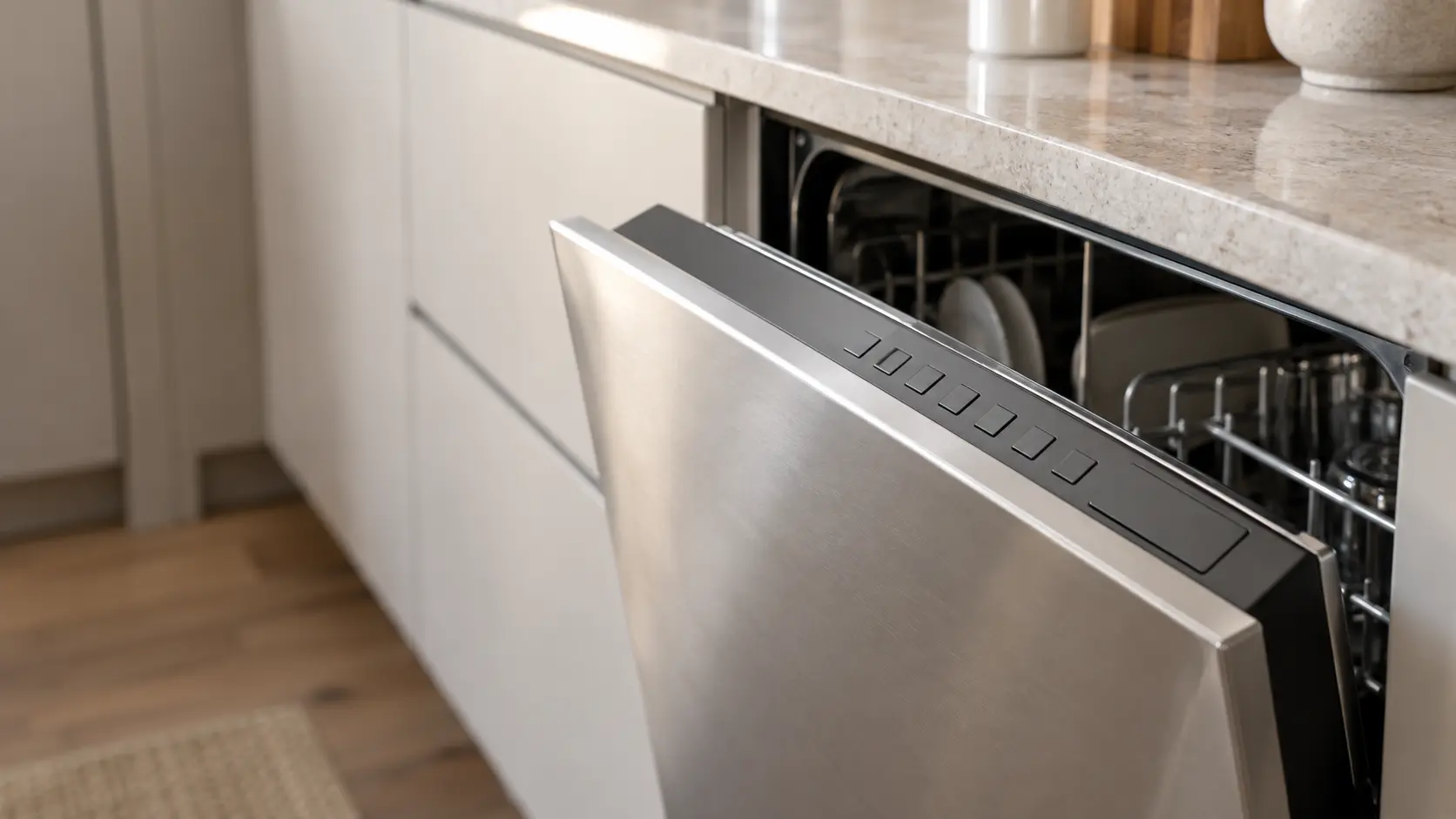
Nothing runs until the latch switch tells the control the door is closed. Close the door firmly until it clicks; a rack that sits a little forward or a tall utensil can hold it open by a fraction of an inch. Then look for a lock or child-lock symbol on the panel. On many models, holding one marked button for a few seconds turns it off, and the manual names which one.
Source: Whirlpool — No power, not turning on — Check the plug or direct wiring, then the breaker or fuse; GE Appliances — Built-In Dishwasher Installation Instructions — Individual grounded circuit with a 15- or 20-amp breaker; Whirlpool — Using the control lock — Control lock disables the buttons while the door still opens
Check three: the hot water valve
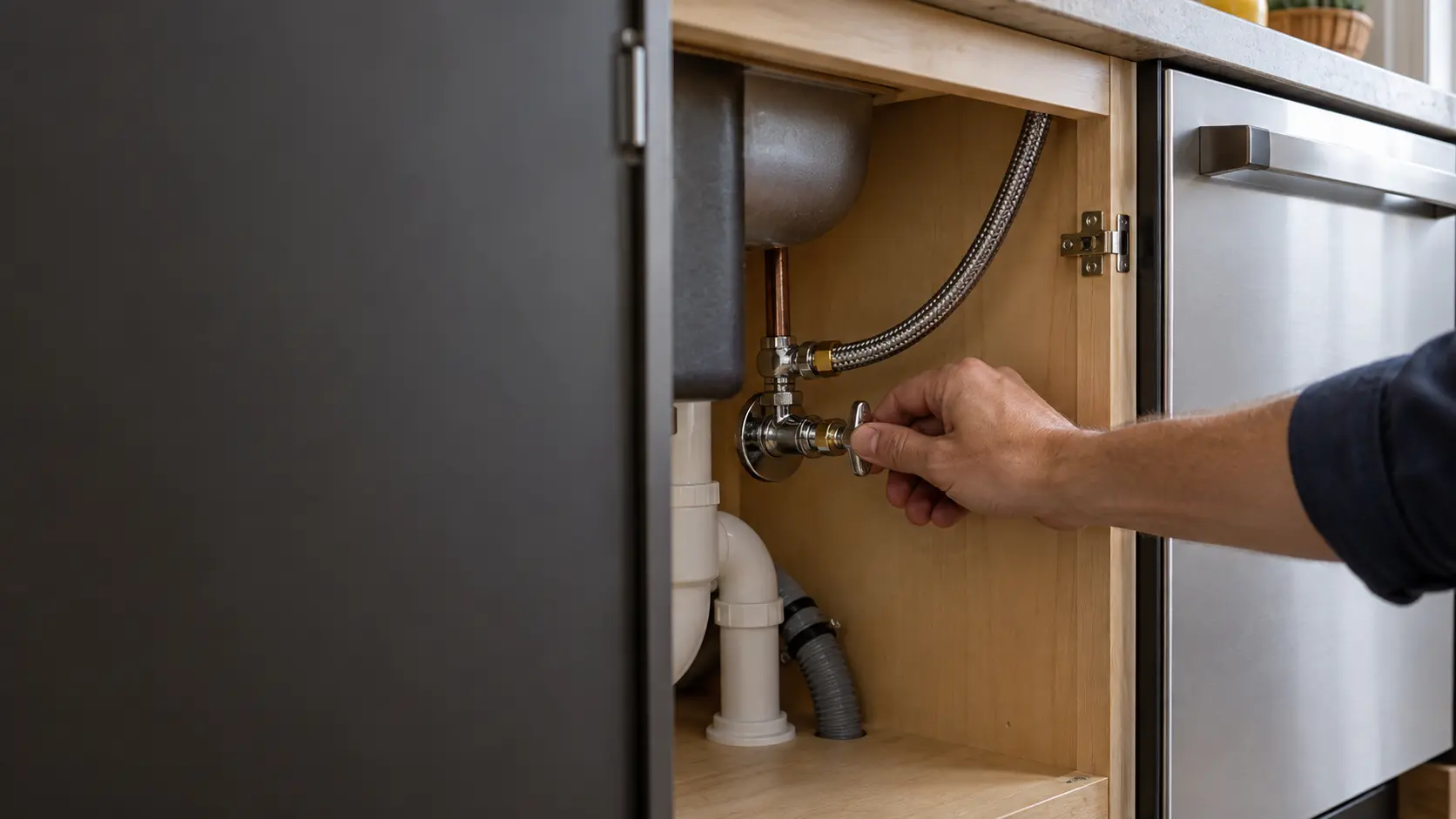
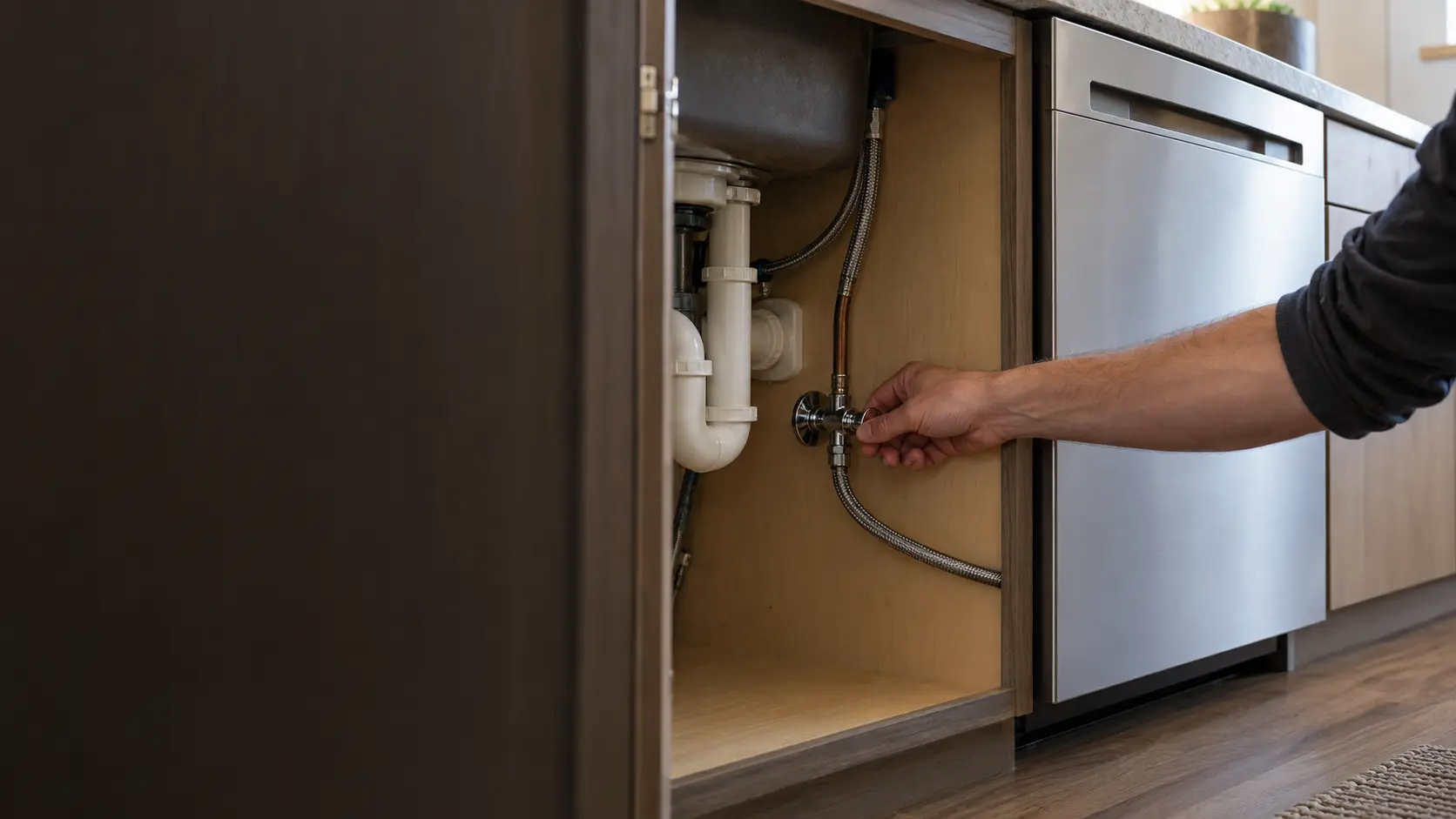
The supply for a dishwasher is almost always a small valve on the hot water line under the sink, often a quarter-turn handle or a multi-turn oval knob. After plumbing work, a new faucet or a winter trip, it is sometimes left closed or only partly open. Open it fully, counterclockwise, and listen for the fill at the start of the next cycle: a steady hiss as the tub takes in water.
A machine that hums at the start but never takes in water, with the valve open, points to the inlet valve or a clogged screen inside it, both beyond this checklist.
- The valve handle sits across the pipe instead of along it: a quarter-turn valve that is closed.
- The machine fills slowly and the cycle runs much longer than usual: a valve left half open.
- Water drips from the valve stem when it moves: tighten the packing nut a little, or leave it and mention it at booking.
Source: Whirlpool — Dishes are not clean — The water supply valve must be completely open
Checks four and five: the filter and the drain path
Open the door, pull the lower rack out and look into the round opening in the tub floor. A filter coated in pulp or grease slows both washing and draining, and a quick rinse under the tap is enough for this check. Our separate filter guide covers the full cleaning.
Then follow the drain path to the sink. Run the garbage disposal for a few seconds, check that the sink empties quickly, and lift the cap off the air gap if the sink has one.
- A disposal installed in the last few weeks: confirm its knockout plug was removed.
- A sink that drains slowly: clear the sink first, since the dishwasher shares its pipe.
- A counter wet around the air gap: clean the air gap before anything else.
Source: Whirlpool — Not draining, water remains at end of cycle — Check the disposal, air gap and knockout plug when water remains
After the five checks
If all five pass, reset the control by switching off the dishwasher breaker for one minute and running a short cycle. Watch the first few minutes: fill sound, wash sound, and whether water drains at the end. A current cycle often runs two to three hours, so a long program by itself is not a sign of trouble.
Write down anything the display shows, what the machine did before it stopped, and the model number from the label on the tub edge. That note helps even if a visit is still needed.
Some problems are also outside what any home check can settle: a door that no longer stays up on its own, a burning smell, a grinding noise that was not there last week or water on the floor. Those skip the list and go straight to a booking, with the power off in the meantime.
Source: Whirlpool — Long cycle time — Typical cycle about two and a half hours, longer by option