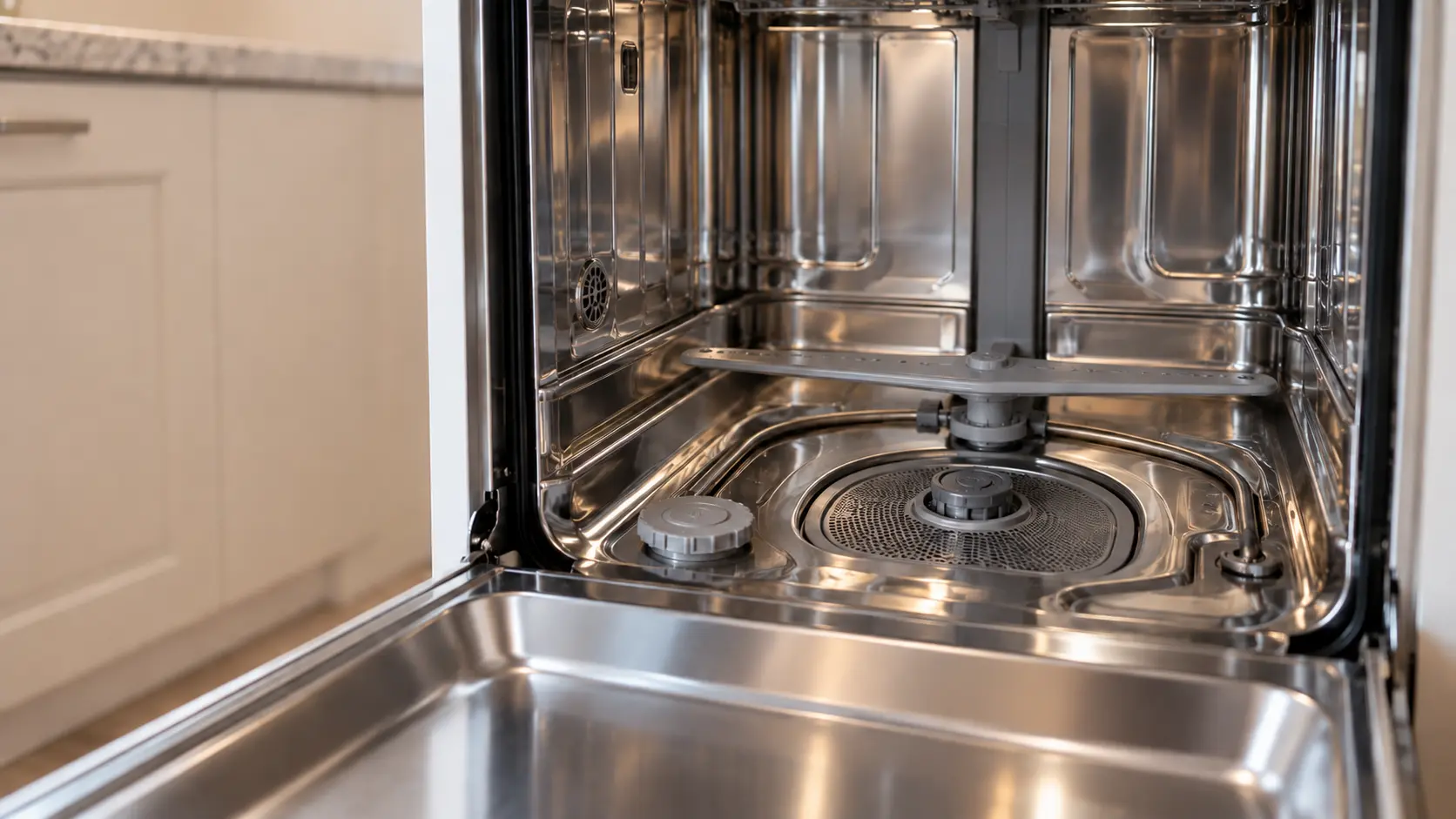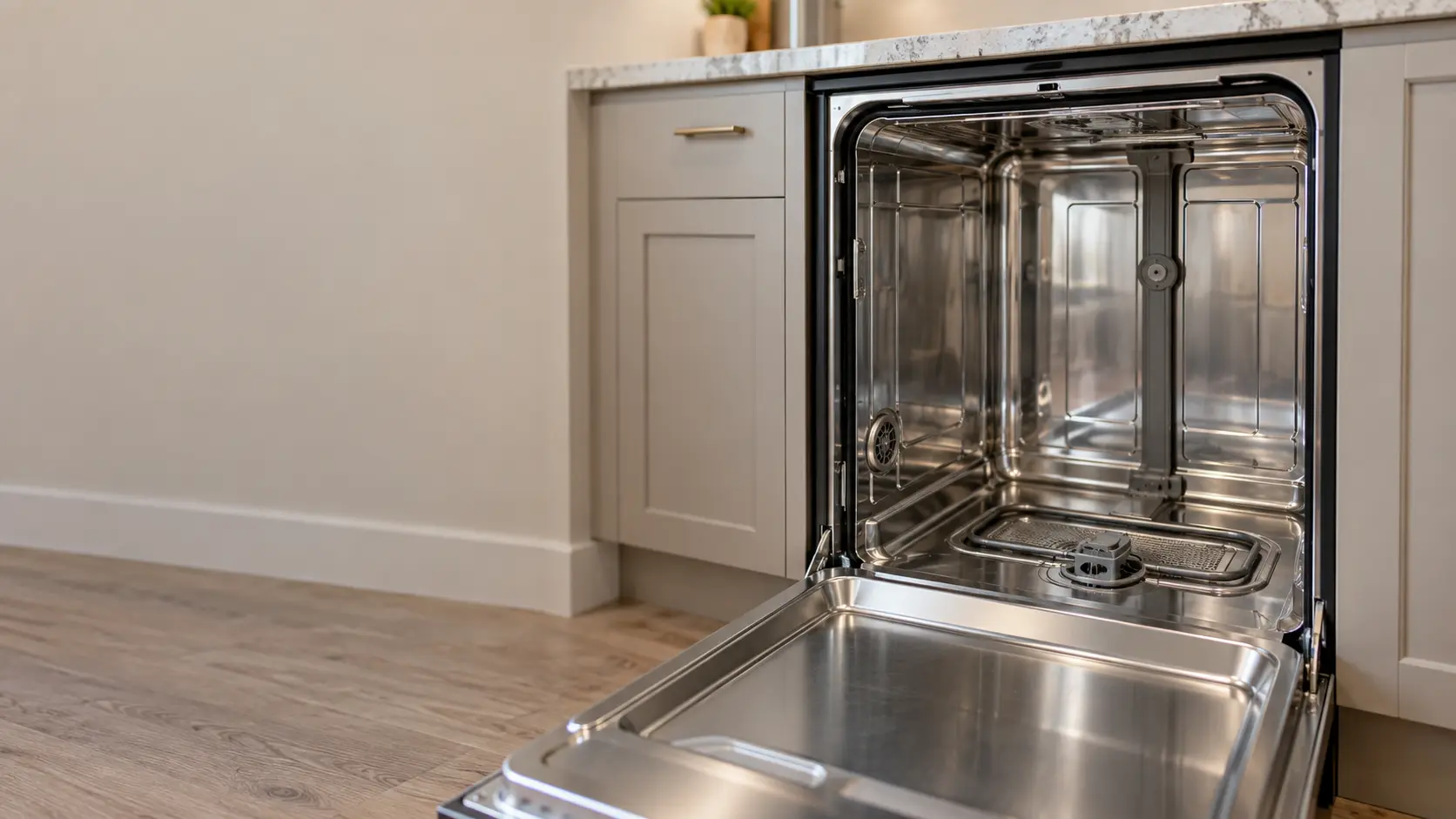
The first minutes after you press start
When you press start, the drain pump runs briefly and then the inlet valve opens. A modern machine takes in a small amount of water for each fill, often no more than a long pipe between the water heater and a far sink holds. On those homes the prewash or the main wash may start with water no warmer than the room.
The dishwasher is not helpless: its heater, either an element on the tub floor or a heater built into the pump, raises the temperature. It does so slowly, and many models pause the cycle until the water reaches a set point, which is one reason a cycle can take much longer than the display first suggested.
Winter makes the gap wider. Water entering the house is colder, pipes in exterior walls or crawl spaces lose more heat, and the same kitchen that gets hot water in ten seconds in August may need a minute in January.
Sensor-held cycles
A thermistor in the tub reports the water temperature to the control board. On sensor cycles the board adds heating time until the target is reached, so a cold fill quietly adds minutes and energy to every load. Owners who complain about three-hour cycles are sometimes describing a long cold pipe rather than a broken machine.
Source: Whirlpool — How water temperature affects cycle time — Run the nearest hot tap first; the cycle pauses to heat water
How to do it
The habit takes less time than loading the silverware basket. To run hot water before starting the dishwasher properly, use the tap that shares its pipe, and do it last, after the racks are full. Its payoff is biggest on a first load of the day, when every pipe in the house has cooled.
Source: Whirlpool — How water temperature affects cycle time — Run the nearest hot tap first; the cycle pauses to heat water

Checking the temperature at the tap
You can find out whether this matters in your home with a kitchen thermometer. Run the hot tap for a minute, fill a glass and read it. CPSC urges a water heater setting of 120°F against scalds, Whirlpool aims for the same figure at the tap, and a reading close to that means the dishwasher is starting well.
- Well under 110°F after a full minute: the water heater may be set low, or the pipe run is very long.
- Around 120°F: a good supply for any dishwasher with its own heater.
- Much higher than 125°F: a scald risk at every faucet in the house, and not needed for the dishwasher.
Counting the seconds
Time how long the tap takes to turn hot. That number is your routine: if it is fifteen seconds, the step barely matters; if it is ninety, it matters on every load. Homes with a recirculating pump on the hot line get hot water almost at once and can skip the step.
Homes with a tankless heater
An on-demand heater lights its burner or element only above a certain rate of flow. A dishwasher's small, short fills can fall below that threshold, so some of its water arrives unheated even after the tap has been run. Check the heater's minimum flow rate in its manual; a small buffer tank or a recirculation setting is the usual answer.
Source: Whirlpool — Dishwasher water temperature troubleshooting — Run the tap 30 to 60 seconds and aim for 120°F; CPSC — Avoiding Tap Water Scalds — Set water heaters to 120°F to prevent tap-water scalds
When the tap is not the answer
Some complaints look like a cold-supply problem and are not. A cycle that runs long even with a hot first fill, a display that sits on the same time for half an hour, or dishes that are cold and wet at the end point to the machine's own heating rather than the plumbing.
The reverse also happens. A tap that never gets properly hot, whatever you do, is a water heater question: a thermostat set low, a failing element in an electric tank, or sediment filling the bottom of an old one. The dishwasher only reveals it, because it is the appliance that most depends on the supply.
- Hot tap, cold dishes and a very long cycle: have the dishwasher's heater circuit checked.
- Lukewarm tap everywhere in the house: have the water heater checked first.
Other habits that help the heat
The water temperature is one part of how well a load comes clean. A few other habits work with it rather than against it.
None of these replaces a working heater. They only let the machine spend its energy on washing rather than on catching up from a cold start.
- Avoid running the dishwasher while someone is showering or the washing machine is on a hot fill; they compete for the same tank.
- Choose the heated or high-temperature option for greasy pans and plastic storage containers that need a hot rinse to dry.
- Scrape plates rather than rinsing them hot at the sink; sensors read slightly soiled water and adjust the wash accordingly.
- Load so that nothing blocks the spray from the heater or the thermistor on the tub floor.