How water reaches a dishwasher
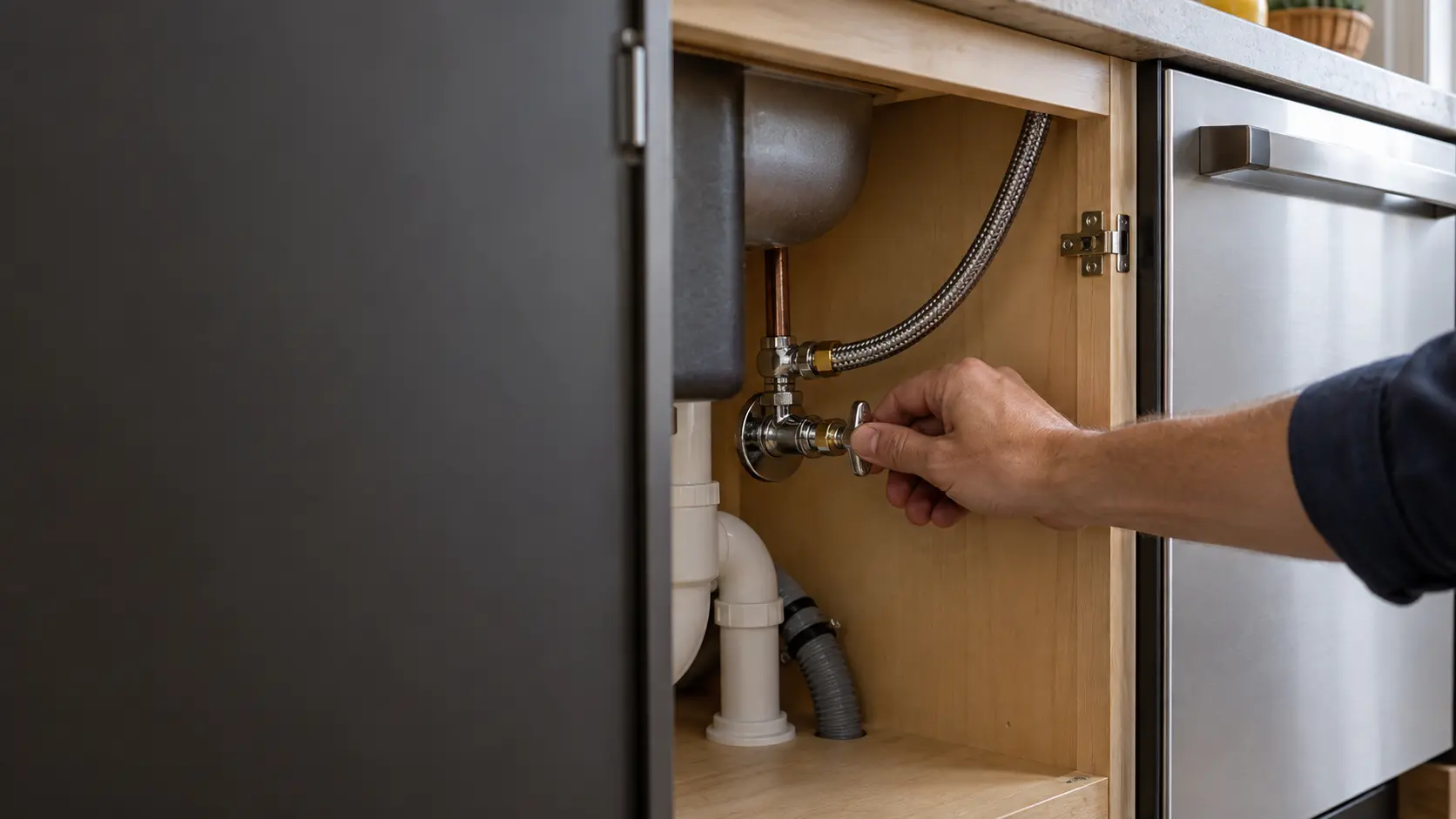
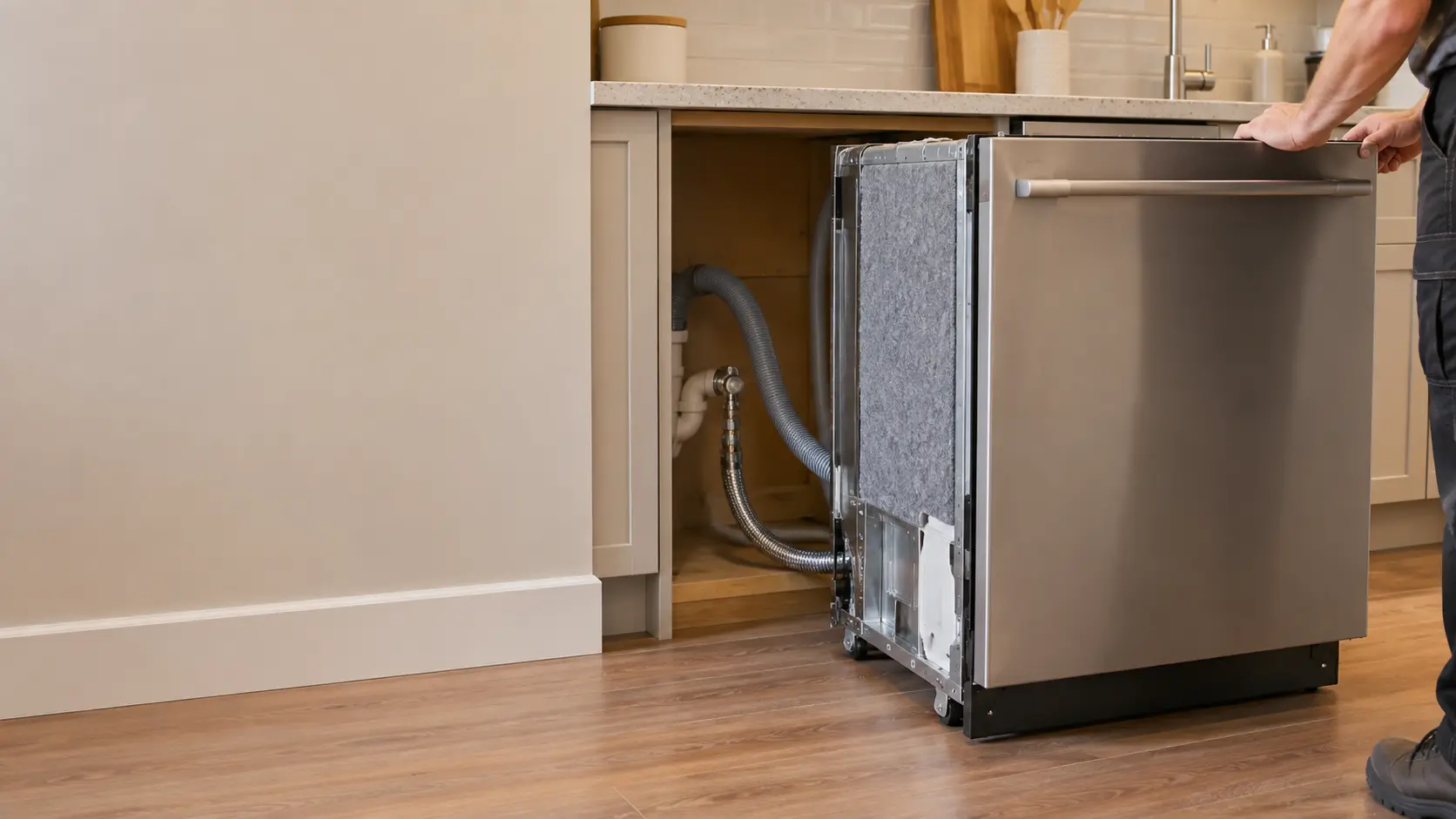
The typical American installation takes hot water from the kitchen sink supply. A shutoff valve on the hot pipe in the sink base feeds a flexible line that runs through the cabinet wall and under the tub to the inlet valve at the front of the machine, behind the kick plate. A brass elbow screws into the valve and the line connects to the elbow.
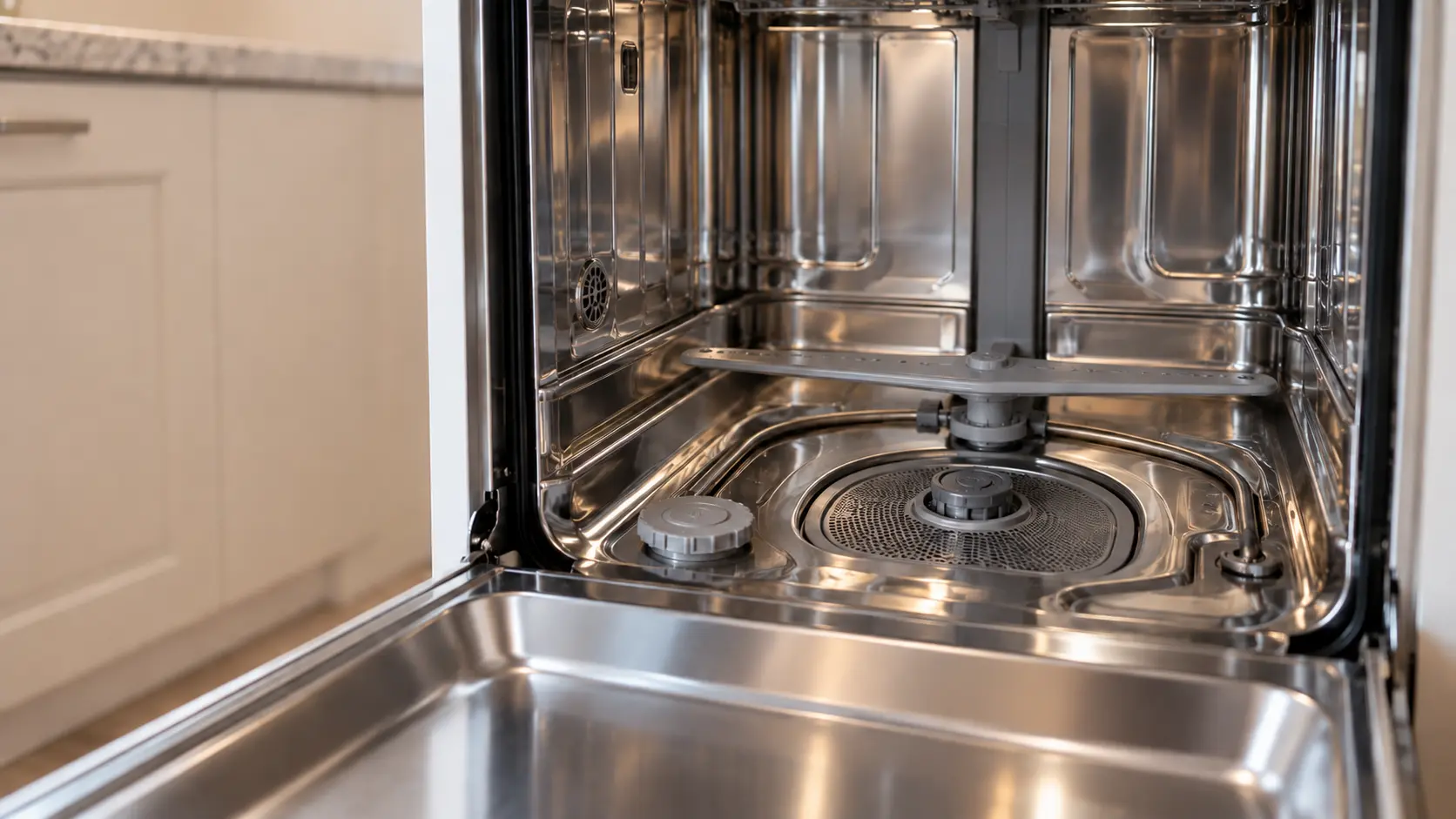
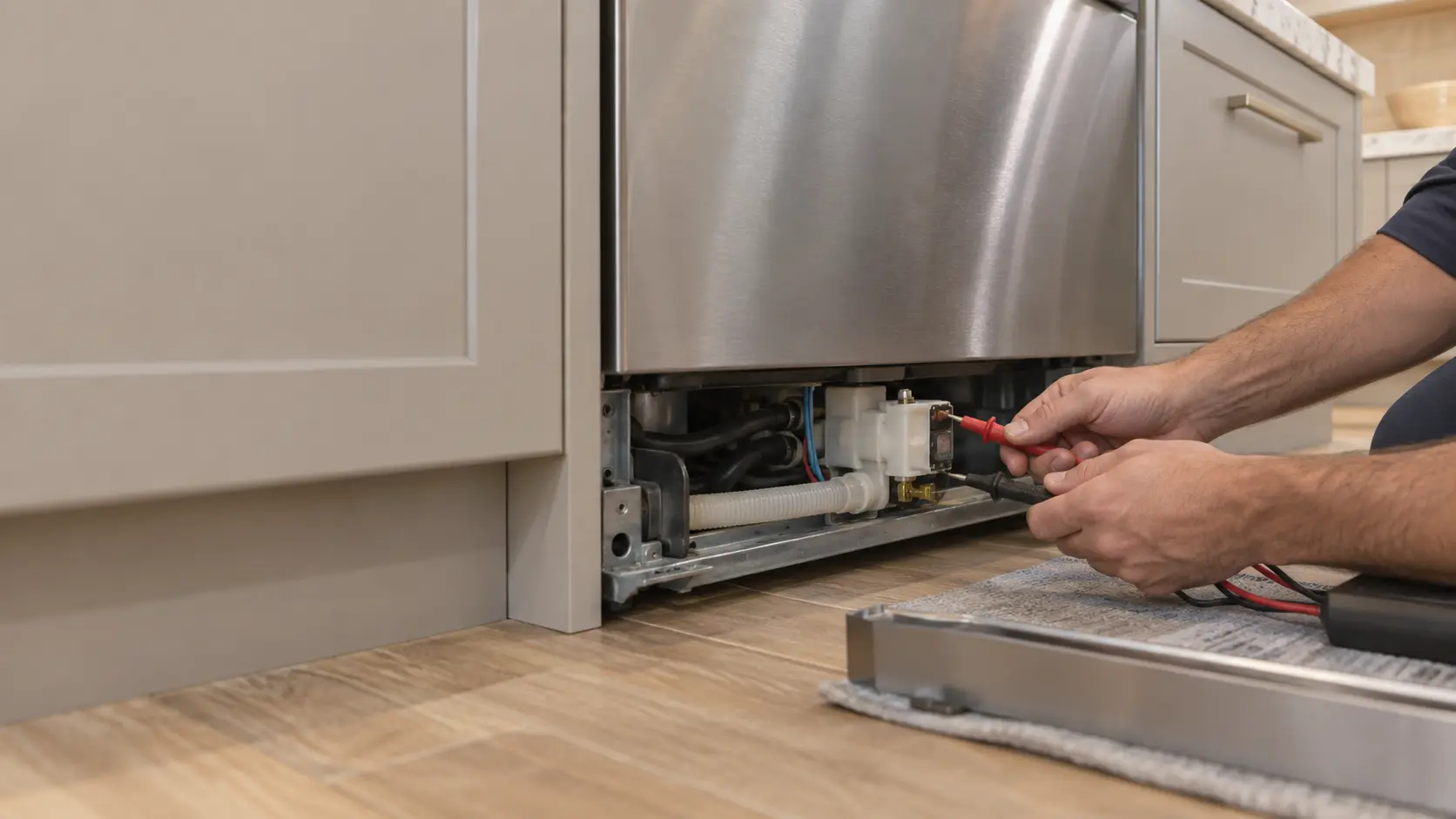
The inlet valve is an electrically operated valve that opens when the control calls for water and closes when the fill is done. Everything upstream of it is under house pressure all day, every day, whether the dishwasher is running or not.
A few minutes spent under the sink twice a year is the cheapest protection the kitchen has. What to look at:
- The braid of the supply line, for rust spots, frayed strands or a bulge
- The compression nut at the shutoff, for green or white crust
- The valve stem, for a bead of water where the handle enters the body
- The cabinet floor under the line, for staining or soft spots
- The line where it passes through the cabinet wall, for rubbing against a sharp edge
What the line is made of
Older installs used soft copper tubing, which is durable but kinks easily when the machine is pushed back into place. Most current ones use a braided stainless line with rubber inside, which is easier to route and should be replaced if its braid shows rust or broken strands.
Water pressure
Installation manuals give an acceptable pressure range, commonly from around 20 up to 120 psi. Below the bottom figure the machine may fill slowly enough to show an error; very high house pressure is a job for a pressure-reducing valve at the main, not for the dishwasher.
Source: Whirlpool — Connecting a dishwasher to the water supply — Hot line, shutoff valve, braided or copper line, 3/8-inch compression, 20–120 psi; GE Appliances — Built-In Dishwasher Installation Instructions — 3/8-inch copper or braided line at 20 to 120 psi
Why the incoming temperature matters
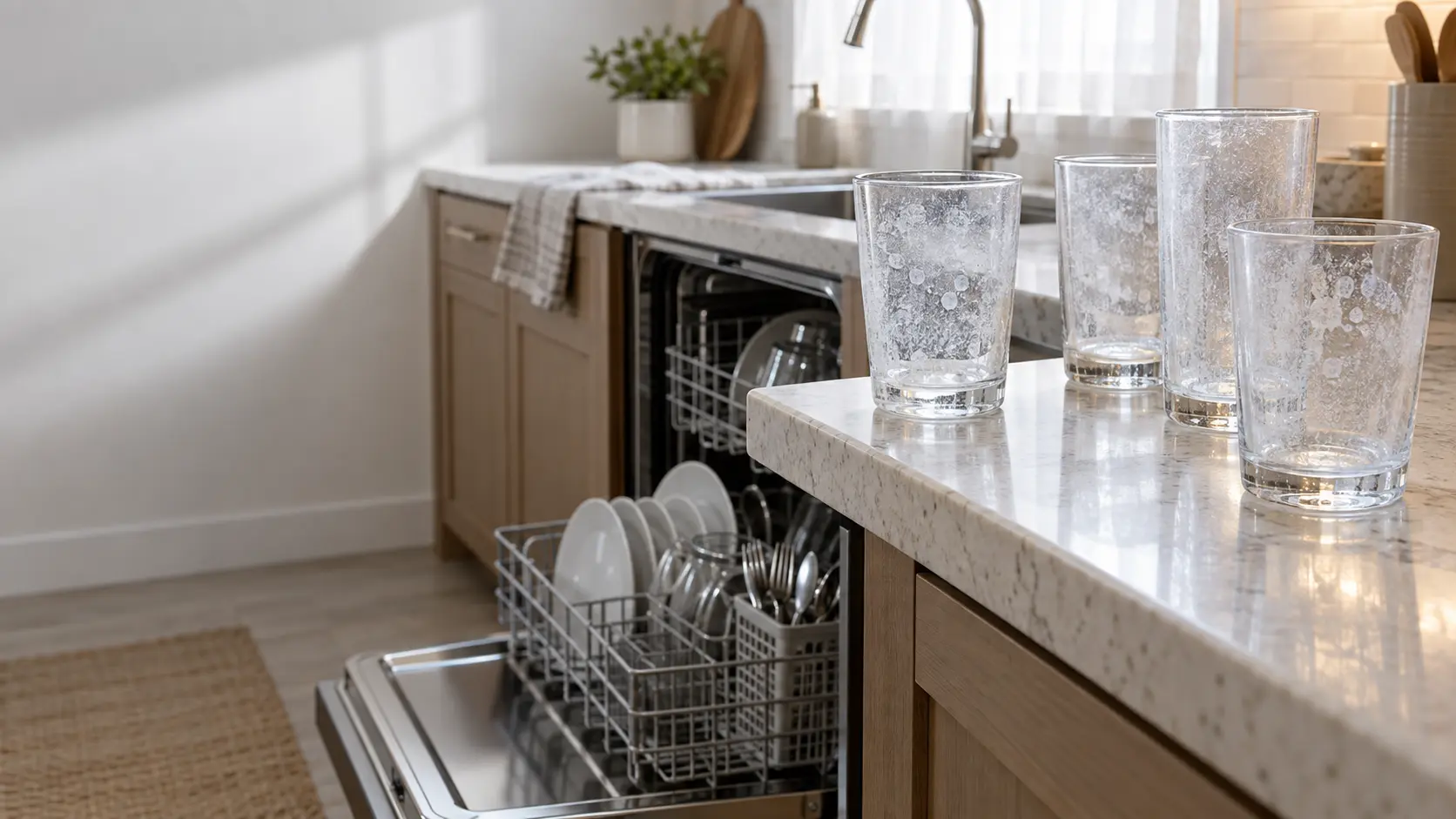
Detergent enzymes and grease removal both depend on heat, and a machine that starts with lukewarm water spends part of the cycle simply warming it. Many models extend the cycle when the incoming water is cool, which owners notice as a wash that runs far longer than it used to. Some add a heating pause that makes the problem invisible except for the clock.
The dishwasher's own heater, or the heater built into its pump, raises the temperature further for the main wash and final rinse. It is designed to top up, not to start from cold.
Drawers and compact models are more sensitive to this than full-size machines. Their small tubs hold less water and their heaters are sized to match, so a cool supply takes a larger share of each cycle to correct.
- Greasy film left on plastics and pans
- Detergent pods that are only partly dissolved
- Cycles that run noticeably longer in winter than in summer
- Dishes that come out wetter than they did
Source: Whirlpool — How water temperature affects cycle time — About 120°F entering; cooler water lengthens the cycle

Measuring the dishwasher water temperature
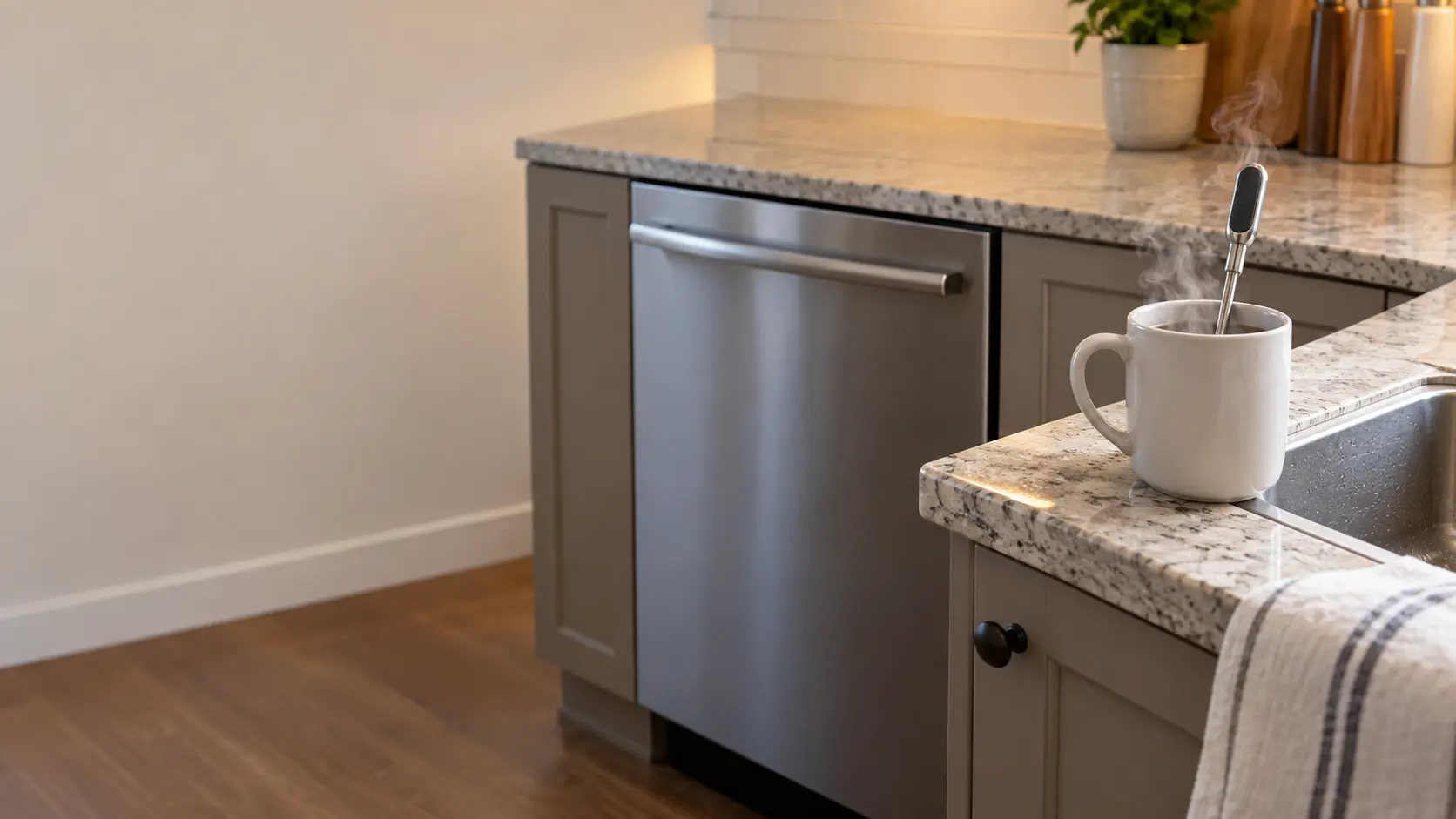
A kitchen thermometer and a mug are all it takes. Run the hot tap at the sink until it stops getting warmer, fill the mug and read it after a few seconds. Around 120°F is the target most manuals give; readings in the low 100s mean the water heater, the distance from it, or both, are working against the machine.
Take the reading at the time of day the machine usually runs. After evening showers the tank may be partly drawn down, and the dishwasher water temperature at that hour can be several degrees lower than a morning test suggests.
Kitchens far from the water heater
Water left standing in a long pipe cools to room temperature, and the dishwasher's first fill takes exactly that water. Running the sink tap until it is hot, just before pressing start, clears the pipe so the machine gets heated water from the start.
Tankless water heaters
A tankless unit fires only when it senses enough flow. A dishwasher's short, gentle fills sometimes stay under that threshold, so the machine gets cold water from a heater that works perfectly at the shower.
Source: Whirlpool — How water temperature affects cycle time — About 120°F entering; cooler water lengthens the cycle
Temperature and scald safety
It is tempting to turn the water heater up to help the dishwasher. CPSC recommends a setting of 120°F to reduce the risk of tap-water scalds, noting that young children and older adults suffer most of those injuries, and hotter water at every faucet is a real hazard in a house with either.
The better answer to a lukewarm supply is usually the tap-running habit, a high-temperature or sanitize option on the dishwasher, or a look at the heater's actual output, which drifts as sediment builds up in older tanks.
A mixing valve at the heater is another route some households take: the tank runs hotter while the valve blends the outgoing water down to a safe temperature at the taps. That is a plumber's installation, and it changes what the dishwasher receives only if it is set that way.
Source: CPSC — Avoiding Tap Water Scalds — Set heaters to 120°F; young children and older adults suffer most scalds
After plumbing work in the kitchen
A new faucet, a replaced water heater or a repiped kitchen can all change what reaches the dishwasher. Faucet installers sometimes swap a dual-outlet valve for a single one and leave the dishwasher line capped, or connect it to the cold side by mistake. A new water heater often arrives set by the installer rather than at the temperature the old one used.
If the dishwasher began washing poorly or running long right after such work, check the mug temperature first, then trace which pipe the dishwasher line actually leaves from. Both take minutes and rule out the plumbing before anything inside the machine is suspected.