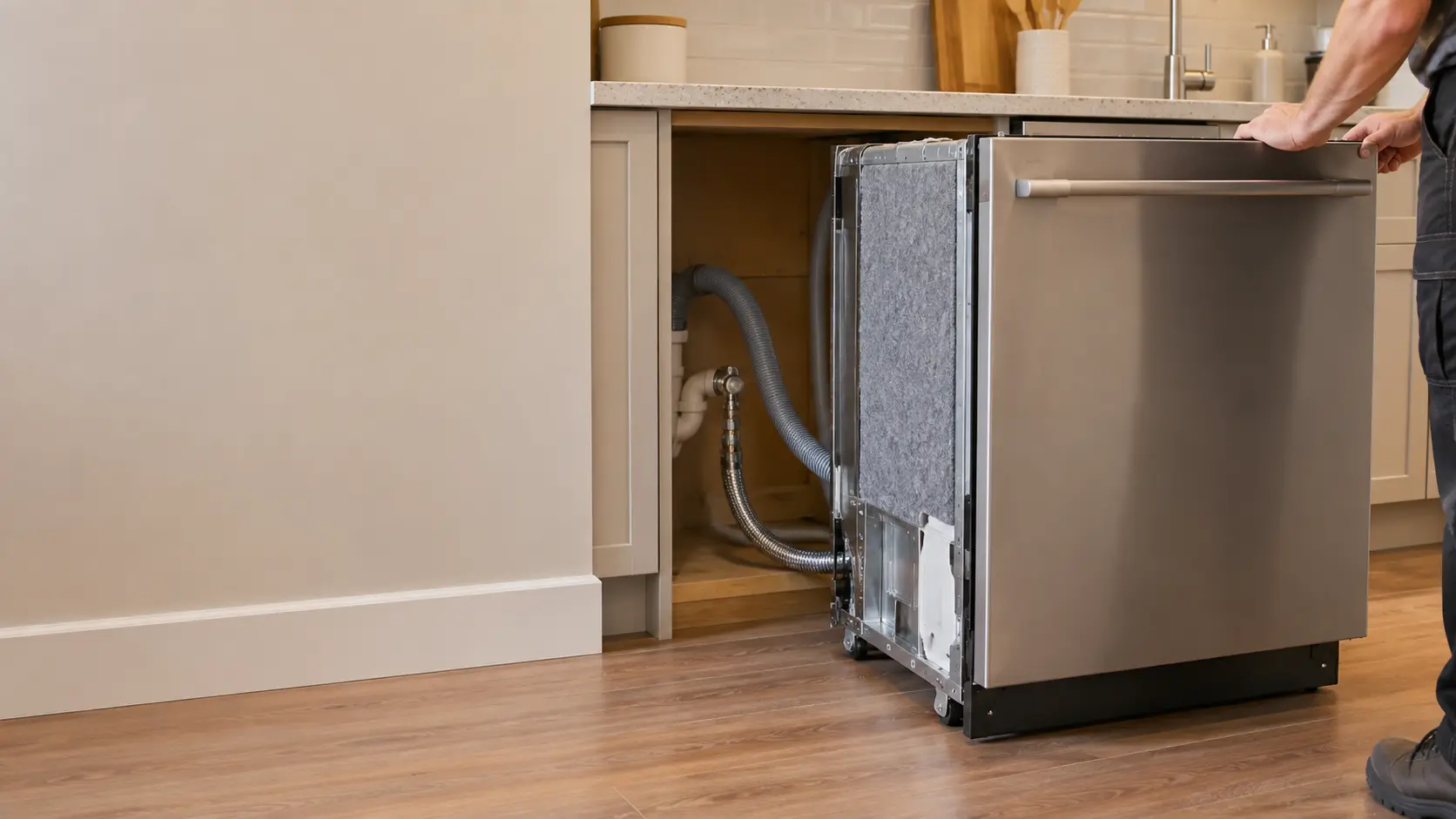


Fitted right the first time
Installation and setup
guides.
The drain hose loop, the supply line, leveling, anti-tip brackets and why the disposal connection trips up new installs.
Mon–Sat, 8am–8pm
- Three guides
- Read before you book
- Says where to stop
Book a visit
Three short steps, about a minute.
or call (844) 430-4286
Loading appointment form…
The appointment form couldn’t load. Please try again.
Installation and setup,
guide by guide.
A dishwasher is only as good as the three connections and four feet that hold it in the kitchen. The drain hose route, the hot-water supply, the electrical feed and the way the machine is fastened in its opening are all decided on installation day, and a mistake in any of them can pass for a failed part for years.
All 18 guides
The Drain Hose High Loop and the Air Gap
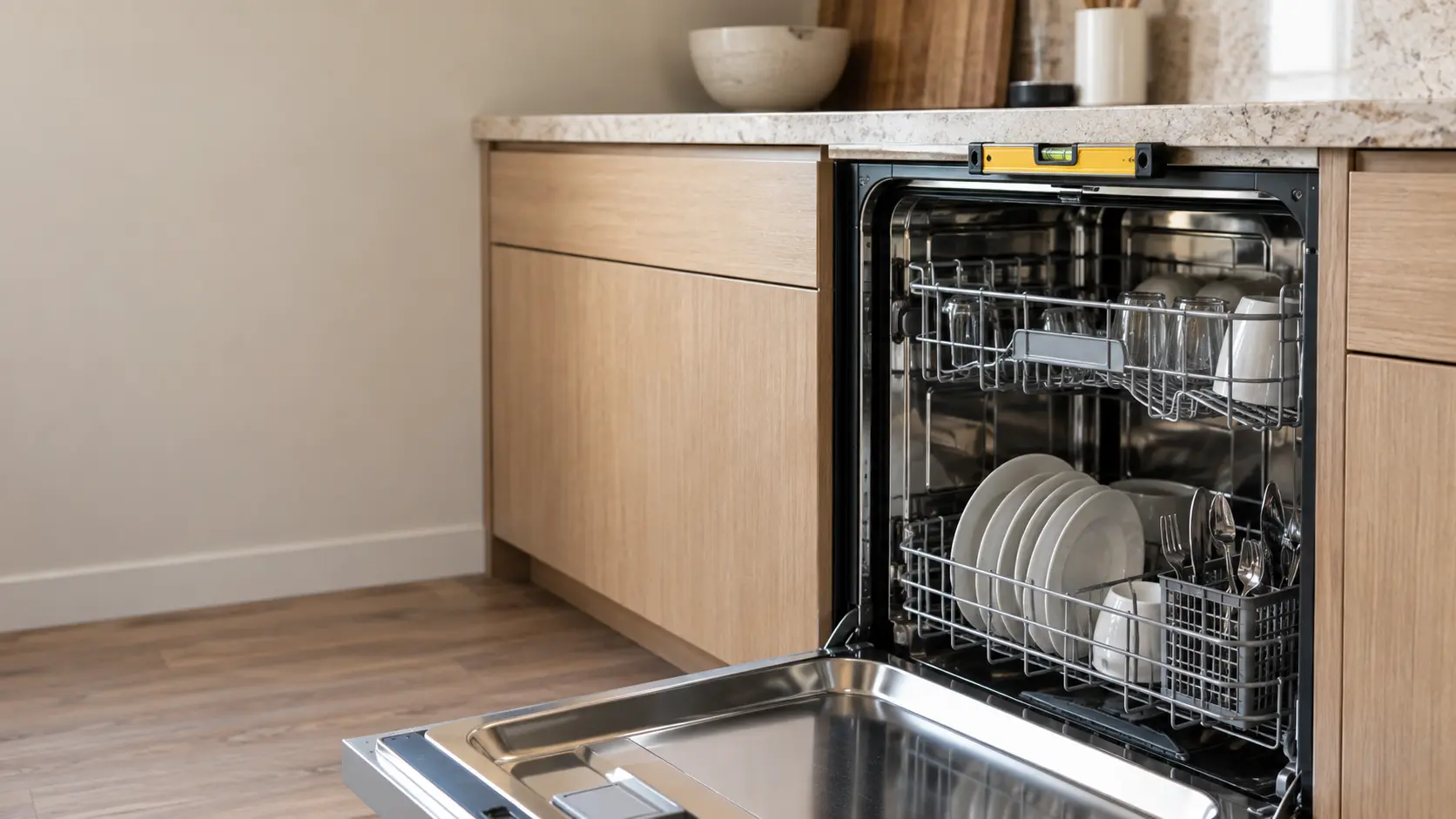
Leveling a Dishwasher and Its Mounting Brackets
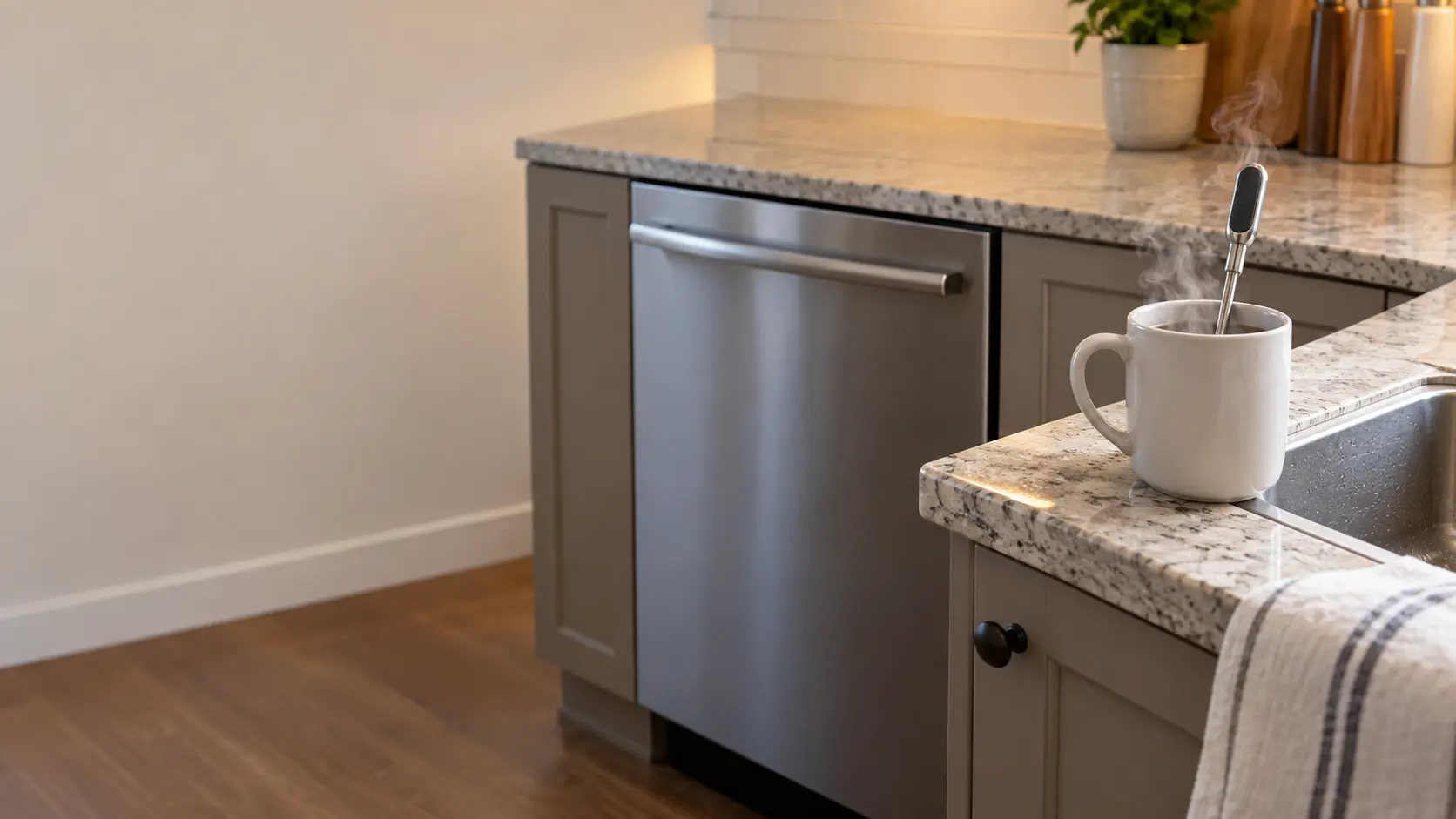
Water Supply and Hot Water Temperature
Fitted right the first time.
These guides explain what each connection should look like and how to check it from the sink base or the kick plate, without pulling the machine out. They are worth reading after a new install, after a disposal or faucet has been replaced, after new flooring or a countertop went in, or when a machine that behaved well for years starts draining, latching or cleaning differently.
Each one marks the line past which the job belongs to a plumber, an electrician or an installer.
Not sure where to start?The short answerThe Drain Hose High Loop and the Air Gap
A dishwasher high loop is the drain hose fastened up near the underside of the countertop before it drops to the disposal or sink drain, so sink water cannot siphon or back up into the tub.
The short answerLeveling a Dishwasher and Its Mounting Brackets
Dishwasher mounting brackets fasten the top of a built-in to the underside of the countertop, or to the cabinet sides under stone, so the machine cannot tip forward when the door and racks are loaded.
The short answerWater Supply and Hot Water Temperature
Dishwasher water temperature starts at the water heater: most installation manuals want hot water at about 120°F reaching the machine, and CPSC recommends 120°F at the heater to prevent scalds.
When reading
is not enough.
If the checks in these guides did not settle it, the visit picks up from there, stop by stop.
What repairs cost- 01Find the cause
- 02Price it first
- 03The part
- 04Fix and run a cycle
The problems
these answer.
Each has a page of its own, with the causes in the order worth checking.
All 17 problems


Questions about
installation and setup.
The dishwasher was fine until the kitchen was remodeled. Could the remodel be the cause?
What can I check without moving the dishwasher?
Does a new dishwasher need new hoses?
The other
sections.
Split by what you are trying to find out rather than by which part of the appliance it concerns.
All guides


Back to your everyday
Let’s get your dishwasher working again.
Three short steps online, or one call. Tell us what you are seeing and pick a window that works.