
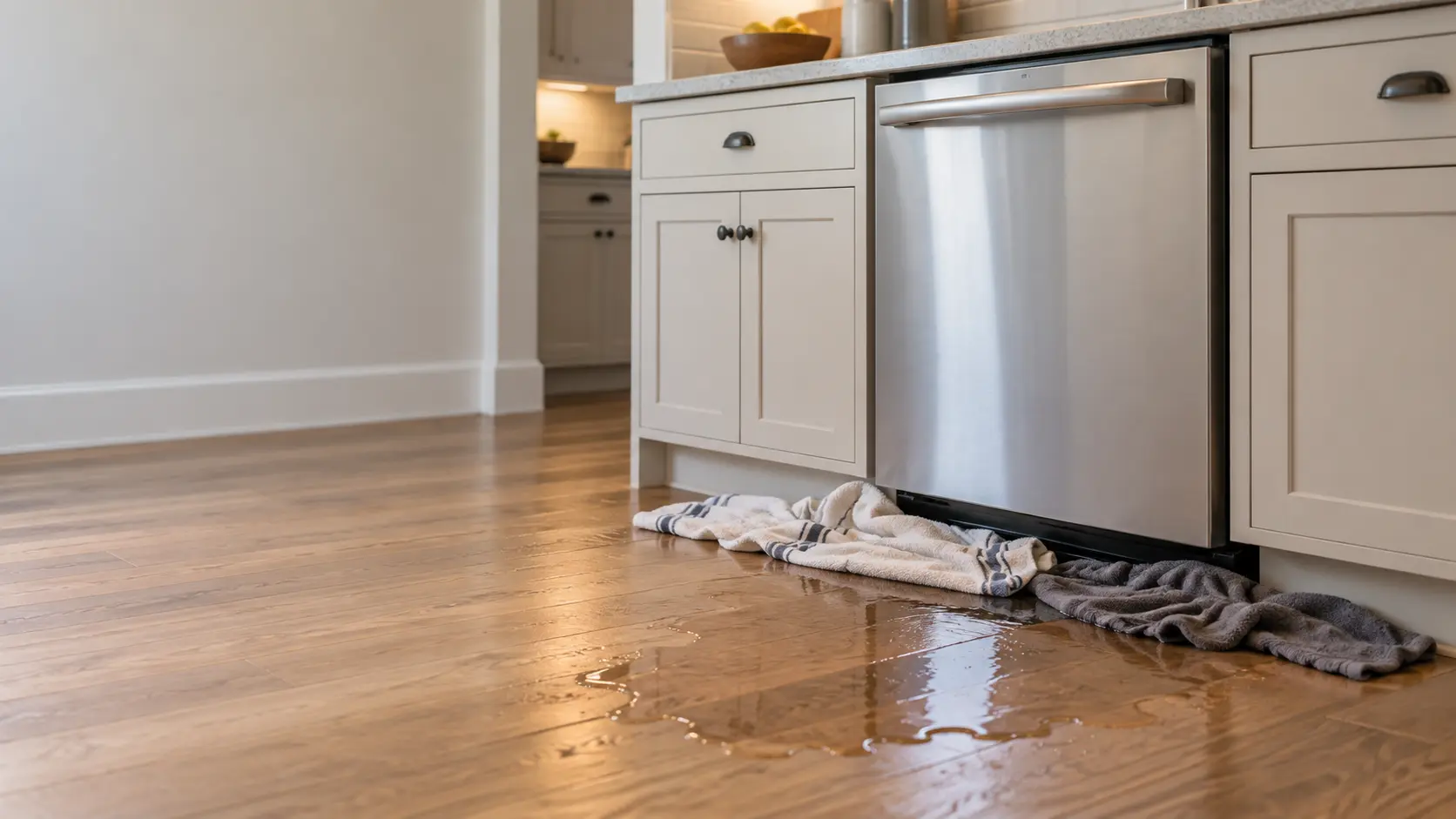

Is it safe to run, and what about the floor
Safety and water damage
guides.
What to do when water reaches the floor, what a hot smell means, and when to cut the power before anything else.
Mon–Sat, 8am–8pm
- Three guides
- Read before you book
- Says where to stop
Book a visit
Three short steps, about a minute.
or call (844) 430-4286
Loading appointment form…
The appointment form couldn’t load. Please try again.
Safety and water damage,
guide by guide.
Most dishwasher trouble is an inconvenience: a tub of standing water, a load that has to be washed again. This section covers the smaller group of problems where waiting costs more than the repair, because water is reaching the floor or electricity is doing something it should not.
All 18 guides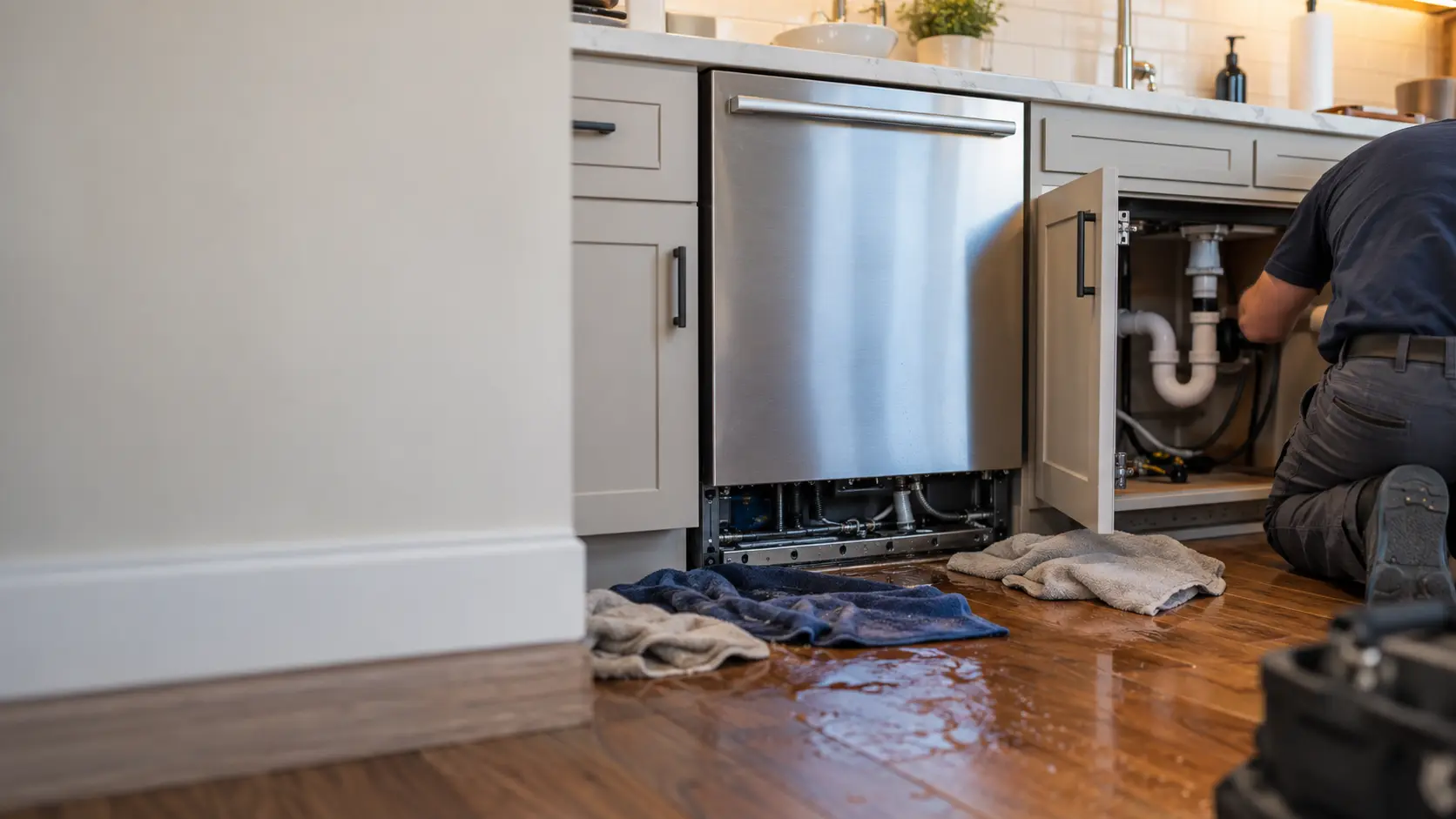
Dishwasher Leaks and Water Damage: What to Do First
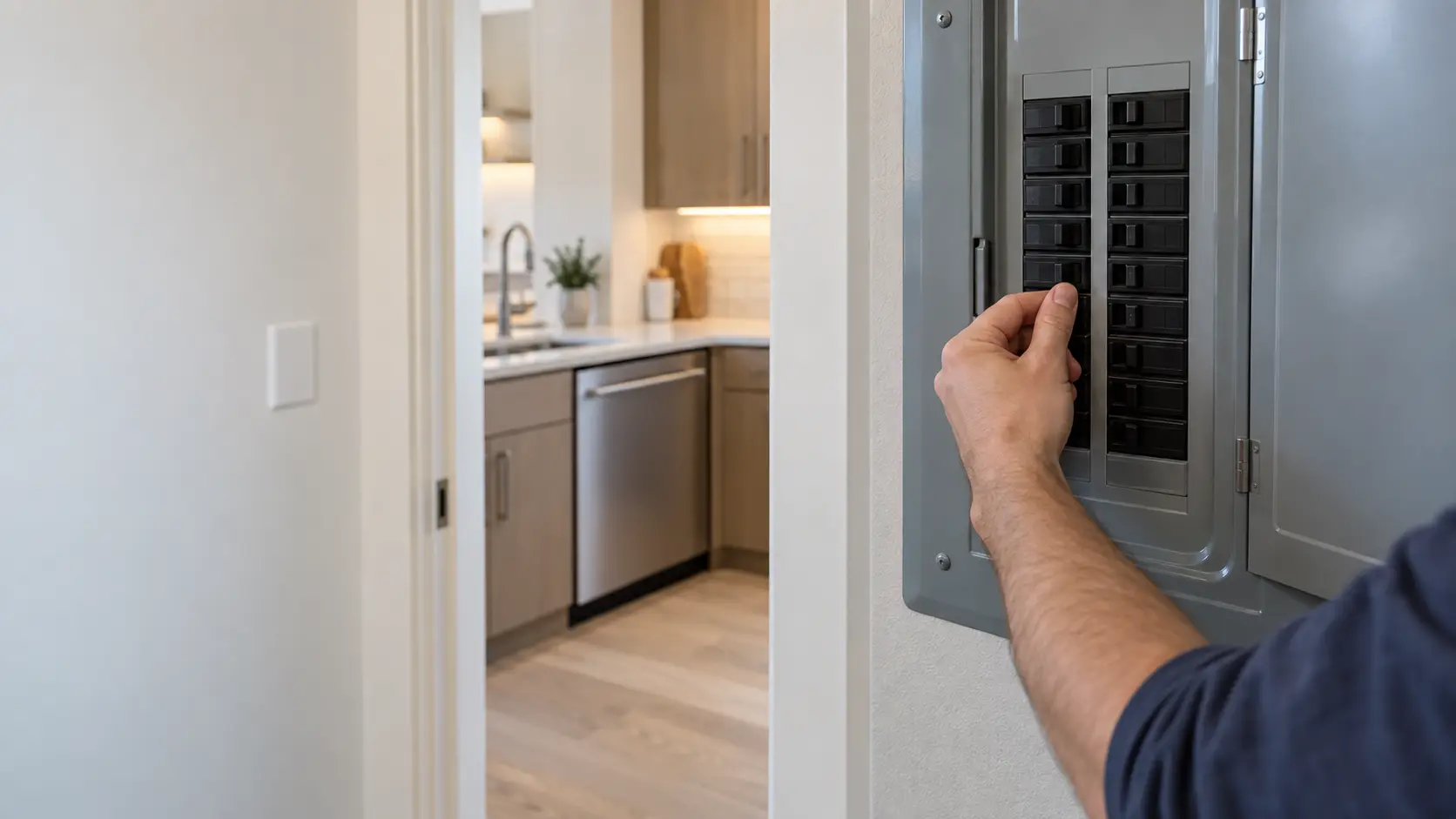
Burning Smell or Tripped Breaker: What to Do

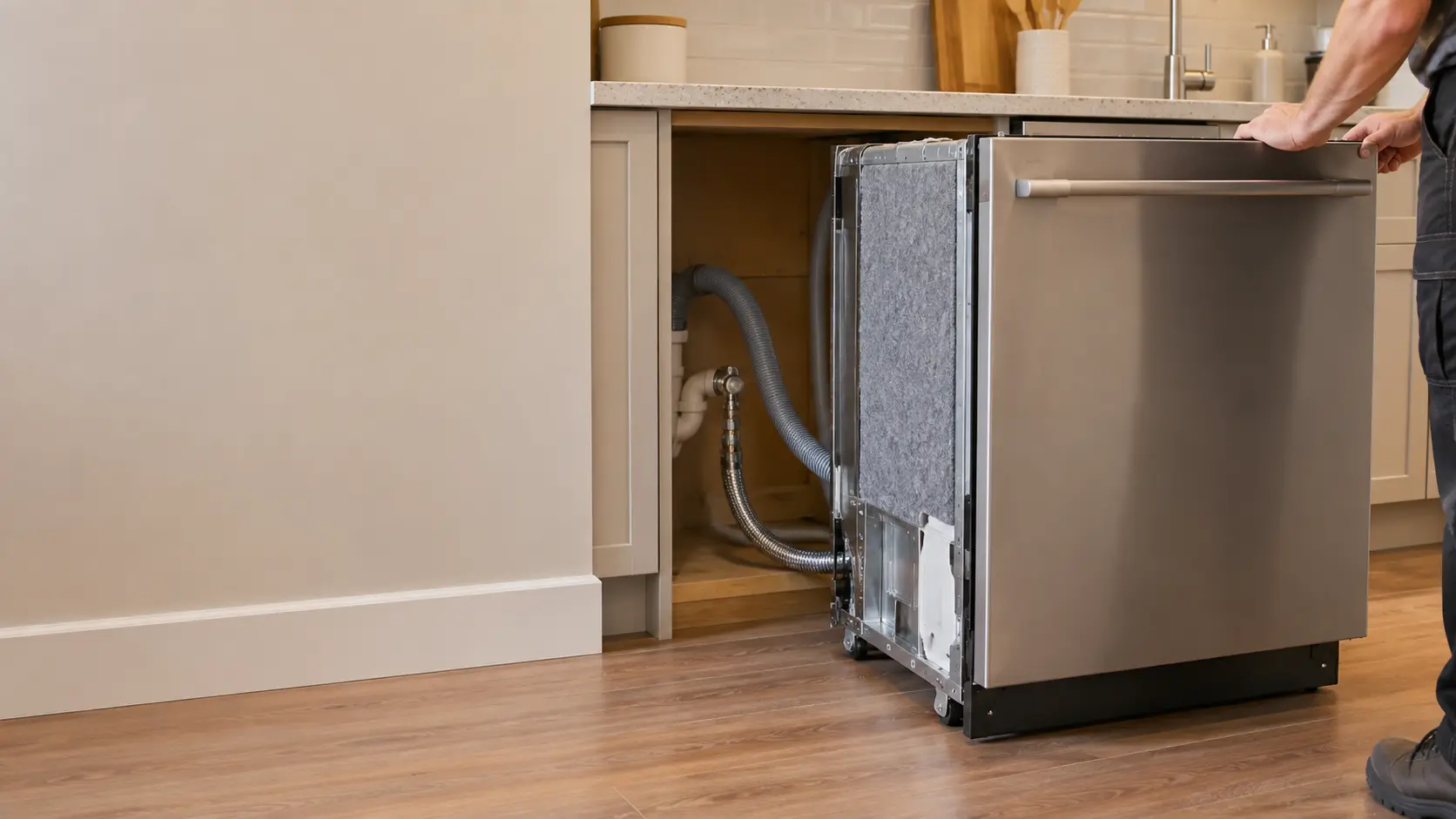
The Dishwasher and Garbage Disposal Connection
Is it safe to run, and what about the floor.
Each guide starts with what to do in the first few minutes, such as which valve to close, which breaker to switch off, and what to leave alone, and then explains how to read what happened so the visit that follows is short. They are written for the owner standing in the kitchen with the problem in front of them, and they are just as useful read ahead of time, while nothing is wrong and the valve and breaker can be found calmly.
Where a guide reaches wiring, the supply line or a disposal's electrical connection, it says so and stops there.
Not sure where to start?The short answerDishwasher Leaks and Water Damage: What to Do First
To limit dishwasher water damage, cancel the cycle, switch off the dishwasher circuit at the panel, close the hot-water valve under the sink, and soak up what you can reach.
The short answerBurning Smell or Tripped Breaker: What to Do
A dishwasher tripped breaker, or a hot electrical smell during a cycle, means leave the circuit off and let the machine cool.
The short answerThe Dishwasher and Garbage Disposal Connection
The dishwasher garbage disposal connection is a short hose clamped to an inlet on the side of the disposal.
When reading
is not enough.
If the checks in these guides did not settle it, the visit picks up from there, stop by stop.
What repairs cost- 01Find the cause
- 02Price it first
- 03The part
- 04Fix and run a cycle
The problems
these answer.
Each has a page of its own, with the causes in the order worth checking.
All 17 problems


Questions about
safety and water damage.
What should I locate before anything goes wrong?
Is it safe to leave a dishwasher running overnight or while out?
When does a dishwasher problem become an emergency?
The other
sections.
Split by what you are trying to find out rather than by which part of the appliance it concerns.
All guides


Back to your everyday
Let’s get your dishwasher working again.
Three short steps online, or one call. Tell us what you are seeing and pick a window that works.